3 Visual Merchandising Examples for Fashion Retailers 3 Visual Merchandising Examples for Fashion Retailers

3 Visual Merchandising Examples for Fashion Retailers

Mike Halpert

Head of Product

Mike Halpert is Head of Product at Stylitics, where he leads the development of AI-powered merchandising solutions that help retailers scale inspiration and drive shopper engagement across every channel.

Visual merchandising goes beyond eye-catching window displays—it’s a strategic blend of design, psychology, and technology that guides the customer journey, influences purchasing decisions, and strengthens brand identity across both physical and digital storefronts. 

For e-commerce teams, effective visual merchandising bridges the gap between inspiration and conversion, solving key challenges like product discovery, engagement, and personalization.

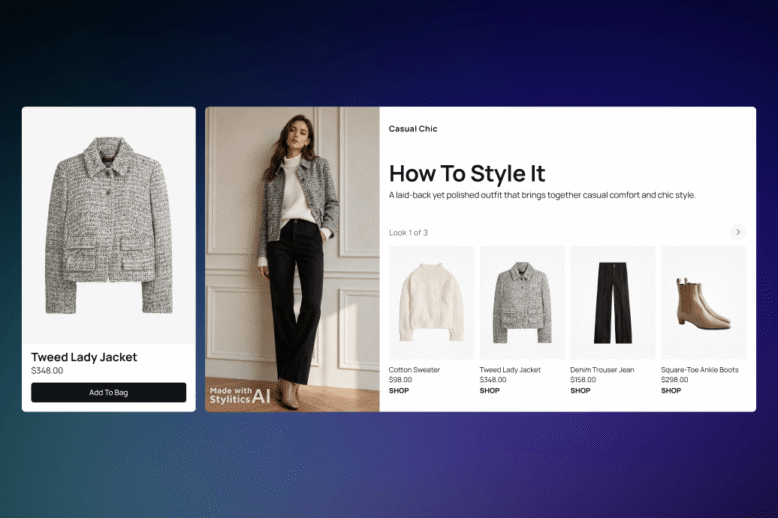
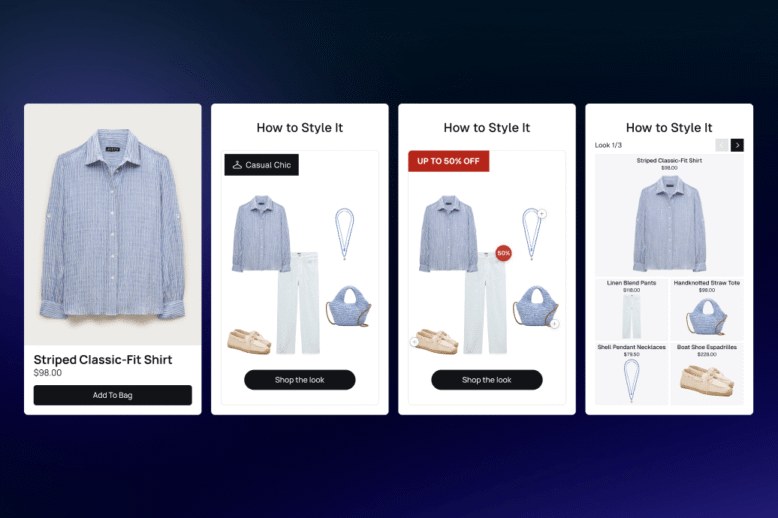
AI-powered e-commerce tools—such as product recommendation engines, visual search, and personalized merchandising solutions like Shop the Look and Complete the Look—help retailers engage shoppers, streamline product discovery, and drive higher conversions.

In this article, we’ll explore how leading fashion brands transform visual merchandising into an immersive, inspiration-driven experience that captivates customers and maximizes sales across all retail channels.

From In-Store Displays to the Screen: Visual Merchandising Fundamentals

At its core, the visual merchandiser’s job is to shape customer experience and tell a brand story that moves product. In a physical retail store, that means orchestrating store layouts, product displays, in-store displays, and retail displays—window installations, end caps, gondola displays, shelving displays, promotional displays, and Point-of-sale (POP) displays—supported by lighting design, signage and graphics, and store fixtures arranged into a deliberate in-store layout. Techniques such as cross merchandising, seasonal displays, and modular assembly keep foot traffic moving and customer attention high.

Modern visual merchandising techniques now blend physical and digital: digital signage, digital screens, interactive displays, and interactive elements sit alongside augmented reality, QR codes, digital projection mapping, and 3D immersive installations built with 3D display modeling software and digital signage platforms. Rooted in consumer psychology, these visual merchandising strategies extend into visual marketing and visual storytelling across pop-up shops, seasonal campaigns, and digital campaigns. Done well, strong store design and a clear merchandising plan turn visual concepts into measurable visual impressions, sales, and repeat customer engagement.

1. Jos. A. Bank: Fashion Retail Meets Digital Innovation

Key Feature: “The Complete Look” for Menswear

Jos. A. Bank makes menswear shopping easier with its “The Complete Look” feature, offering curated outfits that simplify wardrobe decisions. 

By positioning the brand as a trusted style advisor rather than just a retailer, their The Complete Look page acts as a curated hub for effortless styling, making it easier for “put-together” men to shop with confidence. This section highlights versatility and sophistication, offering polished outfits from professional settings to casual weekends.

The “Anywhere You Work” collection highlights office attire, featuring structured blazers, dress shirts, tailored pants, and refined accessories, making it easy for shoppers to put together a boardroom-ready look. The “Weekend Ease” section offers smart-casual outfits, pairing knitwear, relaxed trousers, and stylish footwear for a laid-back yet sophisticated style.

From a visual merchandising perspective, this approach:
  • Simplifies outfit selection by presenting fully styled, occasion-based looks.
  • Encourages larger purchases by bundling multiple complementary items into a single shopping experience.

Jos. A. Bank’s approach is brand storytelling in action: by grouping occasion-based looks, it guides shopper behavior and improves product visibility for complementary pieces, lifting the overall customer experience without a single in-store fixture.

2. Men’s Wearhouse: Retail Store Display Strategy for Digital Shoppers

Key Feature: “Get Styled” Cheat Sheet & Strategic Product Placement

Shopping at Men’s Wearhouse couldn’t be easier than with its “Get Styled” cheat sheet, helping customers quickly find the right outfit for any occasion. This curated section organizes fashion into easy-to-browse categories, such as Date Night and Business Formal, so men can select polished, on-brand looks without the guesswork.

Each shoppable outfit is carefully assembled with a suit, footwear, accessories, and layering pieces, allowing customers to purchase a complete look with just a few clicks. The Date Night section features smart-casual options like plaid shirts, tailored jackets, and versatile boots, while the Business Formal selection includes sleek suits, dress shoes, and office-ready accessories.

From a visual merchandising perspective, this approach:
  • Simplifies outfit selection by organizing looks based on specific occasions.
  • Encourages larger purchases by bundling multiple items into a one-click shopping experience.
  • Gives shoppers confidence by providing pre-styled, polished outfit ideas.

This is a digital merchandising plan working quietly in the background—pre-styled outfits act like curated fitting rooms online, using merchandising data and execution tracking to keep every look shoppable and in stock through tighter inventory management.

3. Dick’s Sporting Goods: Displays for Active Shoppers

Dick’s Sporting Good’s use of a “Shop This Look” feature, offers curated, ready-to-shop styles for both men and women. Instead of just suggesting individual items, this feature presents complete, head-to-toe outfits, making it simple for customers to shop by lifestyle, activity, or aesthetic preference.

For women, selections include casual athleisure, streetwear-inspired looks, and performance-driven activewear. Whether it’s a matching set for lounging, a layered winter outfit for errands, or a technical running ensemble, shoppers can see and purchase full looks instantly.

For men, the feature includes versatile outfits designed for workouts, casual outings, and outdoor adventures. From a Nike-branded streetwear set to rugged, layered hiking fits, shoppers can quickly find apparel that suits their needs.

From a visual merchandising perspective, this approach:
  • Simplifies the shopping experience by showing full, pre-styled outfits instead of separate pieces.
  • Encourages larger purchases by allowing customers to buy multiple coordinated items in one step.
  • Helps shoppers feel confident in their choices by providing inspiration-driven outfit ideas.

For Fashion Retailers, features like this reflect broader visual merchandising trends and market trends: shoppers expect interactive, inspiration-led discovery and increasingly value sustainable fashion and sustainable merchandising. Pairing them with smart digital marketing keeps product visibility high and shortens the path to a sales increase.

The Future of Visual Merchandising in Retail

Visual merchandising has evolved from traditional storefront displays to AI-powered digital experiences, transforming the way consumers engage with brands. Today, retailers combine technology, trend-driven merchandising, and seamless shopping experiences to create more engaging and effective product discovery. By integrating pre-styled outfits, curated collections, and shoppable inspiration, brands can exceed customer expectations while increasing conversion rates and average order values.

As technological advancements reshape this marketing practice, the visual merchandiser’s duties increasingly run on AI. Stylitics turns these capabilities into scalable software: AI Outfitting & Bundling for styled looks, On-Site Search for discovery, AI Colorway Swaps and Model Diversity & Inclusive Imagery for on-model visuals, and Product Catalog Enrichment to keep every product sellable. Its Optimization Suite—backed by Stylitics AI Labs and Stylitics Strata—gives teams the merchandising data, shopper flow insights, and execution tracking to connect visual merchandising software to a real sales increase.

For retailers looking to optimize both digital and in-store merchandising, investing in AI-driven solutions like Stylitics provides a scalable, data-backed strategy that keeps shopping experiences intuitive, engaging, and optimized for conversion.

Ready to Elevate Your Visual Merchandising?

Discover how Stylitics can help you create seamless, shoppable experiences that turn inspiration into sales. Contact us today.

Frequently Asked Questions