Fashion Ecommerce Tools: Outfitting Your Tech Stack in 2026
Mike Halpert
Head of Product
Mike Halpert is Head of Product at Stylitics, where he leads the development of AI-powered merchandising solutions that help retailers scale inspiration and drive shopper engagement across every channel.
The best fashion ecommerce stacks combine speed, personalization, and flexibility across every shopper touchpoint.
Platforms like Shopify Plus, Algolia, and Klaviyo power core functions while Stylitics brings AI-driven outfitting and bundling to life.
Stylitics integrates seamlessly with tools like Contentful and Bloomreach to deliver personalized styling at scale.
Leading brands use Stylitics to turn PDPs, emails, and blogs into shoppable experiences that boost AOV and reduce friction.
The future of fashion ecommerce is no longer just about launching a sleek new online store—it’s about building a scalable, inspirational, and customer-first ecosystem. In 2025, the most successful online fashion retailers will be those who can adapt quickly, personalize effortlessly, and deliver seamless experiences across every touchpoint of the shopping journey.
Why? Because the modern shopper expects more. They want personalized emails based on style preferences, fast and relevant product discovery, curated bundles, flexible payment methods, and frictionless post-purchase service. To meet those expectations, fashion brands need a high-performing ecommerce stack that combines advanced features, intuitive UX, and deep integrations with the right tools.
Whether you’re a new clothing business launching your first online shop or an established lifestyle brand scaling internationally, this guide outlines the top tools across nine core ecommerce categories. We’ll also spotlight how Stylitics integrates visual merchandising and bundling into the broader tech stack to drive revenue and retention.
Across every category below, one theme is the same: a better Shopping Experience that lifts conversion rate, customer engagement, and customer lifetime value. Today’s fashion ecommerce websites blend AI-driven personalization, visual merchandising tools, and AI-powered search with newer formats like augmented reality, 360° product photography, product videos, and visual search to boost product visibility from the first click to the checkout process.
1. Best Ecommerce Platform: Shopify Plus
For fashion brands, Shopify Plus remains the gold standard—a dedicated ecommerce platform known for its simple interface and powerful features. From high-growth startups to international lifestyle retailers, it’s built for speed, flexibility, and scale.
Why Shopify Plus Works for Fashion:
Offers a wide range of striking templates and mobile-responsive themes, ideal for showcasing fashion products
Built-in tools for inventory management, cross-border payments, and multiple storefronts (great for operating separate stores bands internationally)
Supports 8,000+ third-party integrations for SEO optimization, personalization software, and marketing automation features
Includes automation tools like Shopify Flow, Launchpad, and custom domain routing to streamline operations
Shopify Plus is ideal for brands that want to move quickly, avoid technical complexity, and still benefit from extensive customization. It’s a reliable platform for clothing and fashion ecommerce—whether you’re optimizing drip campaigns or selling through third-party marketplaces.
For enterprise ecommerce teams, the platform’s value compounds when it’s connected to inventory management systems that keep inventory levels accurate across every store—so merchandising, product placement, and promotions never outrun real stock.
Fashion Retailers Using Shopify:
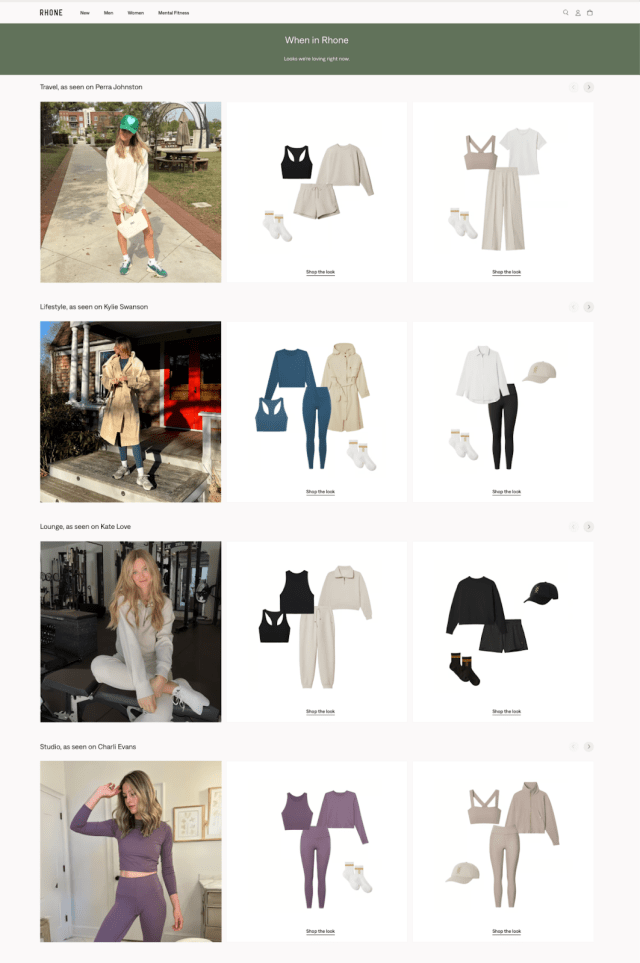
Steve Madden, Faherty Brand, Rhone, Tuckernuck, Boston Proper, and Gym+Coffee, among a suite of other leading fashion retailers use Shopify to deliver premium online experiences with fast page speeds, flexible payment gateways, and scalable infrastructure.
Real-World Example: Rhone
Rhone Apparel leverages Shopify Plus and Stylitics to power its “When in Rhone” influencer-styled carousel—a dynamic bundling experience that increases product discovery, delivers styled outfit inspiration, and drives higher average order value, all without requiring additional development resources. Read the full case study to learn more about how Rhone drives improvements in conversions and AOV with Stylitics.
2. Best Site Search & Product Discovery: Algolia
Search is one of the most important features of any ecommerce platform. If your shoppers can’t find products quickly, they won’t convert. That’s why we recommend Algolia for fashion ecommerce brands needing high-speed, intent-aware product discovery.
Why Algolia Stands Out:
Lightning-fast site search with typo tolerance and semantic understanding
Dynamic faceted filtering for attributes like size, fit, color, material, and price
Real-time indexing to support flash sales, seasonal drops, and new arrivals
Clean, SEO-friendly URLs that boost organic traffic
Fully integrates with Shopify Plus, Salesforce Commerce Cloud, and other composable stacks
Whether you’re guiding someone to a wedding dress or helping them browse seasonal accessories, Algolia transforms the search experience into a conversion engine.
Strong search optimization tools go beyond keyword matching: query suggestions, search ranking, and a search analytics tool help merchandisers see what shoppers actually want through product search and smoother website navigation. Stylitics complements platform search with On-Site Search enrichment and Product Catalog Enrichment, using Data Enrichment and site navigation signals to make every item more discoverable.
3. Best Visual Merchandising & Bundling Tool: Stylitics
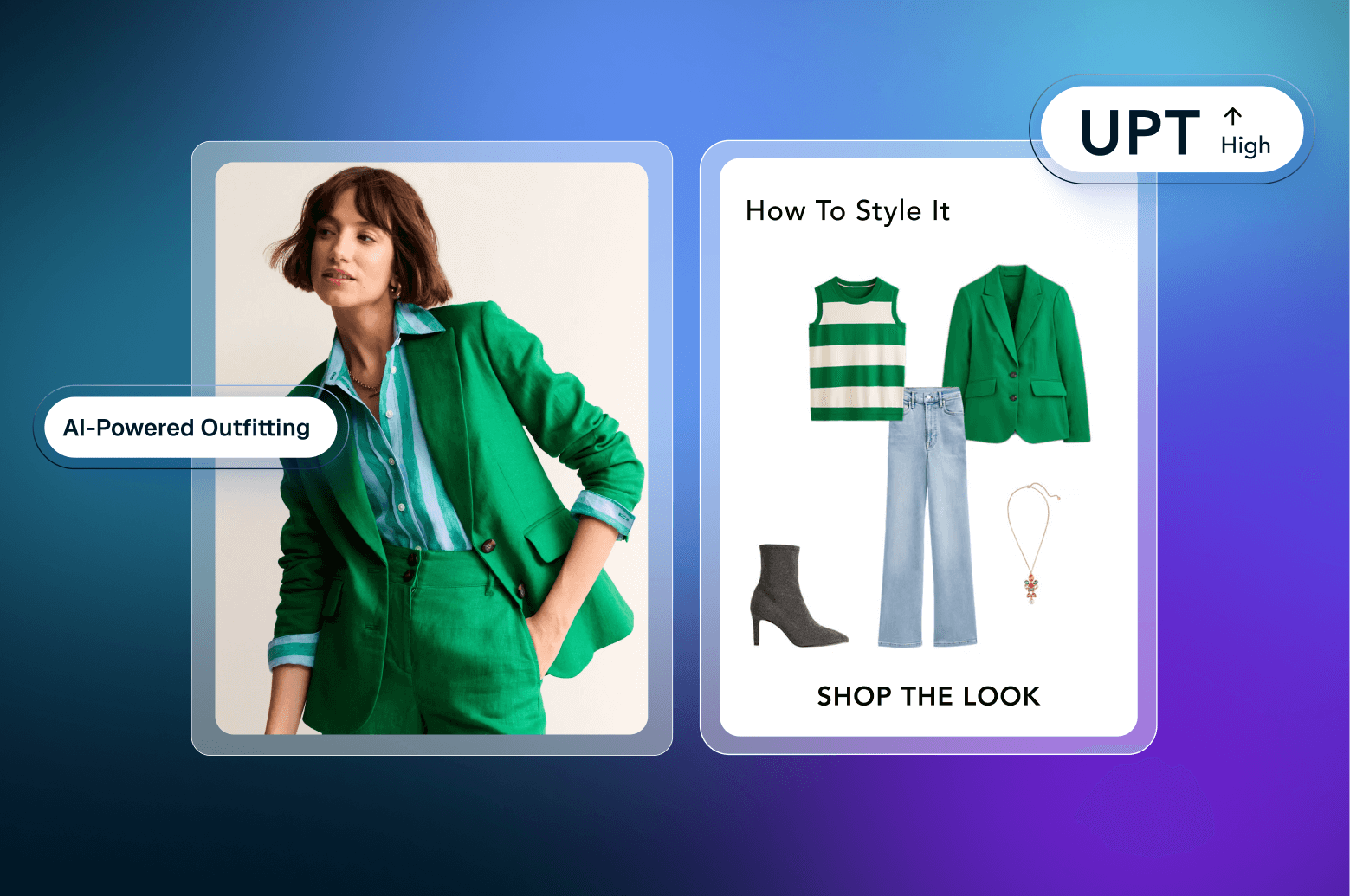
Stylitics is the category leader in visual merchandising and bundling for fashion retailers—transforming standard product pages into fully styled, shoppable experiences. For fashion ecommerce brands, it’s an essential tool for increasing conversion, improving product discovery, and enhancing the overall user experience.
Stylitics Delivers:
AI-driven outfit recommendations based on real-time behavioral signals
Dynamic bundling that boosts AOV and units per transaction
Seamless styling across apparel, footwear, and accessories
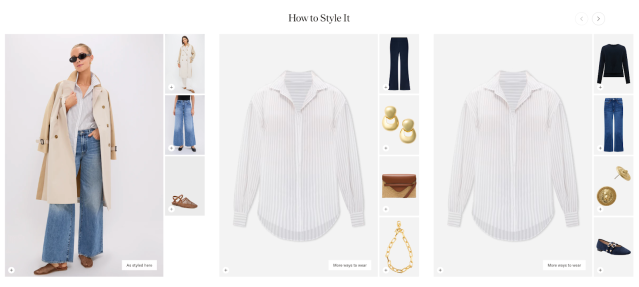
Tuckernuck leverages Stylitics on its Shopify Plus site to showcase fully styled outfits around featured products. This improves customer confidence, drives multi-item purchases, and turns product pages into inspirational moments.
By embedding Stylitics across PDPs, email campaigns, and digital lookbooks, fashion brands can create compelling visual stories that convert browsers into buyers.
For merchandising teams, Stylitics also acts as an ecommerce merchant controls & intelligence suite. Powered by predictive AI and customer behavior analysis across clickstream data and user behavior data, it gives every digital merchandiser real-time analytics—a KPI Dashboard, User Journey Reports, Trend Reports, Rule Performance, and a Top Opportunities report. As AI-driven Merchandising Software, it blends programmatic merchandising tools with predictive analytics, replacing manual merchandising software and disconnected inventory management systems and tying decisions directly to product sales.
4. Best Content Management System: Contentful
Fashion brands need to create localized, seasonal, and trend-driven content—fast. Contentful is a headless CMS that enables ecommerce teams to deploy content across multiple regions, channels, and devices without tapping into developer resources.
Pre-built templates for homepage refreshes, campaign assets, and storytelling modules
Drag-and-drop publishing tools for merchandisers and content teams
Seamless integration with ecommerce platforms and digital experience platforms
With Contentful, fashion brands can scale content creation across websites, mobile commerce, and social media integration without compromising on branding or speed to market.
For fashion teams, the best content management tools double as merchandising surfaces—powering category pages, product placement, promotional badges, and dynamic content personalization that keep campaigns fresh across the ecommerce website.
5. Best Personalization Platform: Bloomreach
In the age of data-driven ecommerce, personalization is no longer optional. Bloomreach helps fashion brands deliver relevant, 1:1 experiences across every channel—email, SMS, web, and in-app.
Why We Recommend Bloomreach:
Personalized emails with dynamic product blocks based on past behavior and wishlist data
Unified campaigns across email, app, and web with omnichannel orchestration
AI-powered recommendations that adapt based on browsing history and product preferences
Deep insights into user segments and campaign performance
Fashion brands use Bloomreach to improve customer retention, reduce bounce rates, and increase campaign ROI without needing a full development team. It’s a powerful tool for lifecycle marketing and building a loyal customer base.
Bloomreach Discovery extends this with AI-driven recommendations and personalization rules that adapt in real time, while AI-driven personalization and personalized suggestions turn browsing into buying. Done well, these personalised shopping experiences compound customer lifetime value across the entire sales funnel.
6. Best Product Information Management (PIM): Akeneo
Managing tens of thousands of SKUs across sizes, styles, and fabrics requires more than spreadsheets. Akeneo helps fashion retailers centralize product data and create consistent, high-quality product pages across every touchpoint.
Why a PIM Like Akeneo is Essential for Fashion:
Centralized control over product specs, descriptions, images, and translations
Faster product launches with streamlined supplier data onboarding
Support for omnichannel distribution to third-party marketplaces, online stores, and wholesale platforms
Built-in validation tools to reduce publishing errors
Akeneo is especially effective for larger businesses with global catalogs and a need for faster content accuracy across their stack for ecommerce. It’s used by brands like Carhartt to ensure every product listing is complete, polished, and aligned.
A PIM keeps your product catalogue clean, but enrichment is what makes it sell. Stylitics layers Product Catalog Management and Data Enrichment on top of your PIM—improving product images, product visibility, and attribute coverage so AI-powered search and AI-driven recommendations have richer data to work with.
7. Best Guided Selling Tool: Zoovu
Too many options can overwhelm your customers. Zoovu is a guided selling platform that simplifies decision-making by using quizzes, advisors, and style finders to match shoppers with the most relevant product.
Why Zoovu Works for Fashion Brands:
On-brand quiz builders that help customers find the right denim, coat, or gym gear
Seamless integration with your PIM and ecommerce platform
Proven reduction in return rates by guiding fit and style selection
Boosts engagement without requiring downloads or app store ratings
Used by Under Armour, Columbia, and Dick’s Sporting Goods, Zoovu empowers fashion brands to guide customers toward confident, high-converting purchases with minimal effort.
Guided selling thrives on interactivity: interactive quizzes and style finders use customer engagement signals to deliver personalized suggestions, much like AI-driven personalization does on the product page. Pairing guided selling with Shop the Look bundles turns a quiz result into a complete, shoppable outfit.
8. Best Marketing Automation Platform: Klaviyo
Klaviyo is the most popular email marketing and automation tool for fashion ecommerce. It helps brands create behavior-based campaigns that are easy to build and highly effective.
Why Klaviyo Dominates Fashion Email Marketing:
Pre-built flows for cart abandonment, back-in-stock, and price-drop alerts
Personalized emails with dynamic content blocks and product recommendations
Strong segmentation tools for mailing lists and behavioral triggers
Seamless integration with Shopify, WooCommerce, and BigCommerce
From welcome sequences to win-back flows, Klaviyo turns your mailing lists into high-performing revenue engines.
The best email programs are measured, not guessed: use A/B Testing, Google Analytics, and social proof in your flows to learn which product recommendations and promotional badges actually drive product sales.
9. Best Post-Purchase Experience Tool: Narvar
The customer journey doesn’t end at checkout—that’s where loyalty begins. Narvar makes the post-purchase experience seamless, branded, and proactive.
Why We Recommend Narvar:
Branded tracking pages that reflect your online presence
Automated delivery updates and delay notifications
Easy return and exchange workflows that align with fashion-specific needs
Actionable insights into shipping performance and customer sentiment
Retailer Example: Lululemon
Lululemon uses Narvar to power post-purchase communications, helping customers stay informed and engaged through every delivery milestone. This enhances satisfaction and encourages repeat purchases—especially important in a fashion category where fit drives returns.
Narvar is considered a communication market leader for ecommerce, turning logistics into a loyalty driver.
Post-purchase is where omnichannel retail proves itself: omnichannel support and visibility into real-time inventory levels keep customers informed from the checkout process to final delivery, protecting the Shopping Experience that earns repeat sales.
Bringing It All Together with Stylitics
Stylitics doesn’t just integrate with your ecommerce stack—it elevates it. Whether you’re running Klaviyo campaigns, publishing with Contentful, or selling on Shopify Plus, Stylitics fits seamlessly into your composable stack to:
Enhance product recommendations with AI-powered outfitting
Deliver cookie-less personalization experiences
Power cross-sell bundles on PDPs and in emails
Convert editorial content and fashion blogs into shoppable assets
By combining automation with visual storytelling, Stylitics helps fashion brands turn every shopper touchpoint into a conversion opportunity.
From social commerce to on-site discovery, Stylitics keeps the same styled bundles consistent across every channel—turning AI-powered outfitting into measurable conversion rate gains.
Final Thoughts
There’s no one-size-fits-all ecommerce solution. But for fashion retailers focused on performance, personalization, and scale, the tools in this guide offer a proven path forward.
Whether you’re just launching a functional clothing shop or optimizing a multinational fashion brand, these platforms help reduce hosting costs, improve SEO optimization, and deliver a consistent, high-converting experience for your customer base.
As the lines between commerce, content, and community continue to blur, investing in a modern ecommerce stack—with Stylitics at the center—is the smartest way to grow in 2025 and beyond.
Frequently Asked Questions
They use AI-powered styling, bundling, and personalization tools—like Stylitics—to drive discovery, increase basket size, and stay trend-relevant.
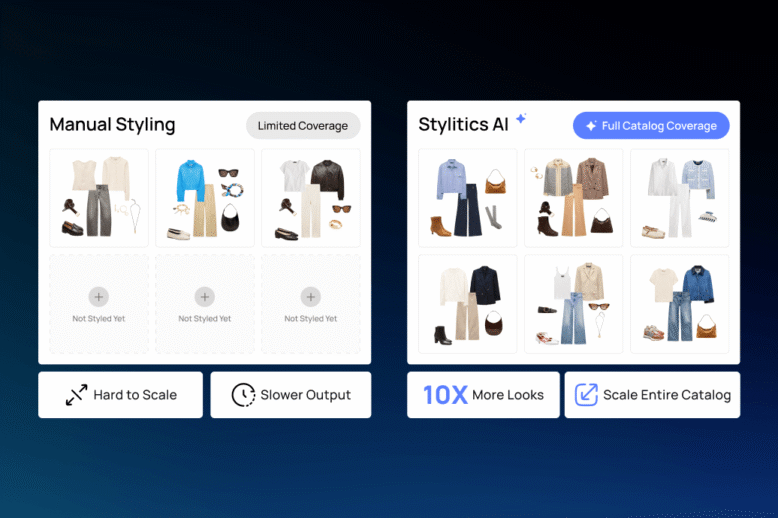
Because it turns every PDP, email, and homepage into a styled, shoppable experience—automating what merchandisers used to build by hand.
Stylitics brings the art of styling and the science of conversion together—making it easier to launch on-brand outfits across the site, fast.



 Shop the Look Let shoppers buy the full outfit directly from any styled image.
 Styled for You Personalized outfit recommendations based on individual shopper preferences.
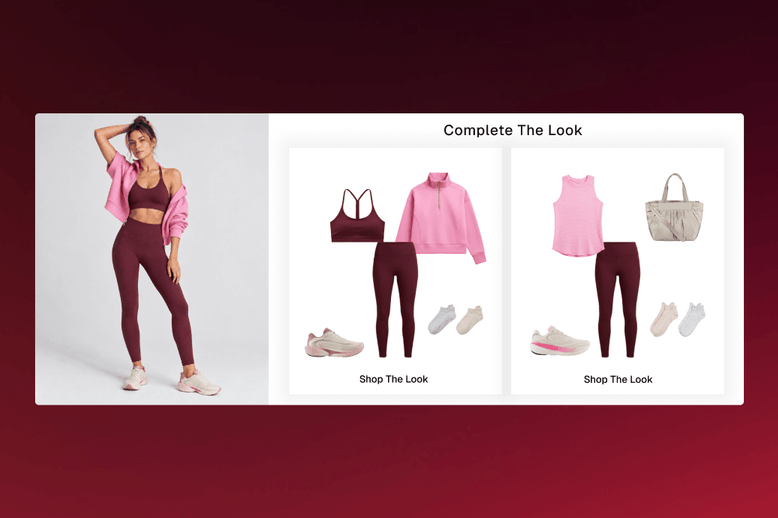
 Complete the Look Suggest complementary pieces to round out whatever a shopper is already viewing.
 Shop Similar Surface visually comparable alternatives when a specific item is out of stock or out of budget.
 Flat Lay to Model Choose from diverse models with full control over pose, crop, and framing.
 Background & Scene Swaps Place products in clean studio backgrounds, lifestyle environments, or custom lighting moods.
 AI Colorway Swaps Create photorealistic images for every colorway from a single reference shot.
 Model Diversity & Inclusive Imagery Output-ready formats for PDPs, social platforms, and campaign lookbooks.