Outdoor Gear Ecommerce Merchandising: Selling the Kit, Not the Component Outdoor Gear Ecommerce Merchandising: Selling the Kit, Not the Component

Outdoor Gear Ecommerce Merchandising: Selling the Kit, Not the Component

Stylitics Marketing Team

The Stylitics Marketing Team explores the intersection of AI, retail, and shopper experience, sharing strategies and insights that shape the future of product discovery and visual merchandising.

A shopper lands on your best hardshell, reads the specs, checks the reviews and leaves. Odds are they didn’t hate the jacket. They just couldn’t tell which base layer goes under it, which fleece fits between, or whether your pack works with the whole setup, so they went somewhere that made it easier.

Most outdoor stores still merchandise one product at a time, with a grid, a PDP and a frequently-bought-together row that pairs a rain shell with a cotton hoodie. That’s fine for selling items. It’s a poor way to sell trips, and trips are what outdoor shoppers are buying.

Outdoor gear ecommerce merchandising works better when you sell the kit, not the component. Below, you’ll see why shoppers buy systems, where generic tactics fall short, how to build kits on four surfaces, and which metrics prove it’s working.

Key Takeaways

  • 183.2 million Americans took part in outdoor recreation in the latest count, and most of them plan purchases around a trip (OIA, 2026).
  • Outdoor shoppers buy systems. Merchandise the layering system, the camp setup and the trip kit on every surface, not one SKU at a time.
  • Huckberry saw a 60% lift in AOV and UPT from shoppers who engaged with outfitting (Stylitics case study, 2025).

Why Do Outdoor Shoppers Buy Systems, Not Single Products?

183.2 million Americans, 59% of everyone aged six and up, took part in outdoor recreation in the Outdoor Industry Association’s latest count (OIA, 2026). Almost none of them go outside wearing one product. They go out in a system, and they shop for one.

When a hiker plans a day out, a shell jacket only works over the right base layer and an insulating mid layer, and the whole stack has to match the conditions on the day. A first overnight trip needs a tent, a pad, a bag rated for the low and a stove that fits the pot. Add the trip requirements nobody enjoys buying, like a headlamp, a first aid kit and other safety items, and a single “camping trip” turns into ten or fifteen line items.

The environments a shopper is heading into decide which parts belong together. A shoulder-season ridge walk, a wet coastal trail and a desert car-camping weekend each call for a different kit, even when the anchor product is the same jacket.

That’s the core problem with most outdoor product pages. They sell the component. The shopper is building the system, so they open five tabs, compare across stores and buy the rest wherever the answer is clearest. A store that only shows the jacket has handed the base layer, the pack and the boots to a competitor. Stylitics’ page on AI outfitting for outdoor brands puts it plainly as selling the system instead of the single layer, and that’s the frame this guide uses.

Where Do Generic Merchandising Tactics Fall Short for Outdoor Gear?

Outdoor market retail sales reached $28 billion in 2024, up just 1%, and casual categories now bring in more than technical gear (OIA with Circana, 2025). Flat sales mean growth has to come from bigger, better-matched orders. The usual ecommerce playbook isn’t built for that.

The market trends behind that number tell the same story, since the outdoor recreation economy accounted for $696.7 billion of value added in 2024, and real gross output grew 2.0% (BEA, 2026). Retail trade was the second-largest piece of it at $169.1 billion. People are still spending on getting outside. They’re just spending it across more casual, mixed-use gear, which makes compatibility harder for the shopper to judge alone.

Generic tactics answer a different question, because frequently-bought-together widgets learn from co-purchase so they surface whatever sat in the same cart last month. That’s why a technical rain shell ends up recommended next to a cotton hoodie and a water bottle. Those items were bought together, but they don’t make a system. The algorithms were trained on grocery and electronics baskets, where co-purchase and compatibility line up. In outdoor gear they don’t.

Discount bundles and free shipping thresholds have the same blind spot. They push the order value up with whatever is cheapest to add, and they train shoppers to wait for a deal. We’d argue the better lever is relevance. Show the base layer that actually works under this shell, at full price, and the add-on sells because it’s needed. Stylitics’ guide to AI bundling for retailers covers why learned, stylist-informed pairings beat rules built on co-purchase alone.

How to Merchandise the Kit Across Your Store

Kit merchandising means showing a full, compatible system wherever the shopper meets a product, from the product page to the inbox. Stylitics runs outfitting for 175+ retailers reaching 200M+ shoppers a month, and the pattern holds across categories. Shoppers buy more, and keep more, when the store does the assembly for them.

Build the Kit Around the Anchor Product

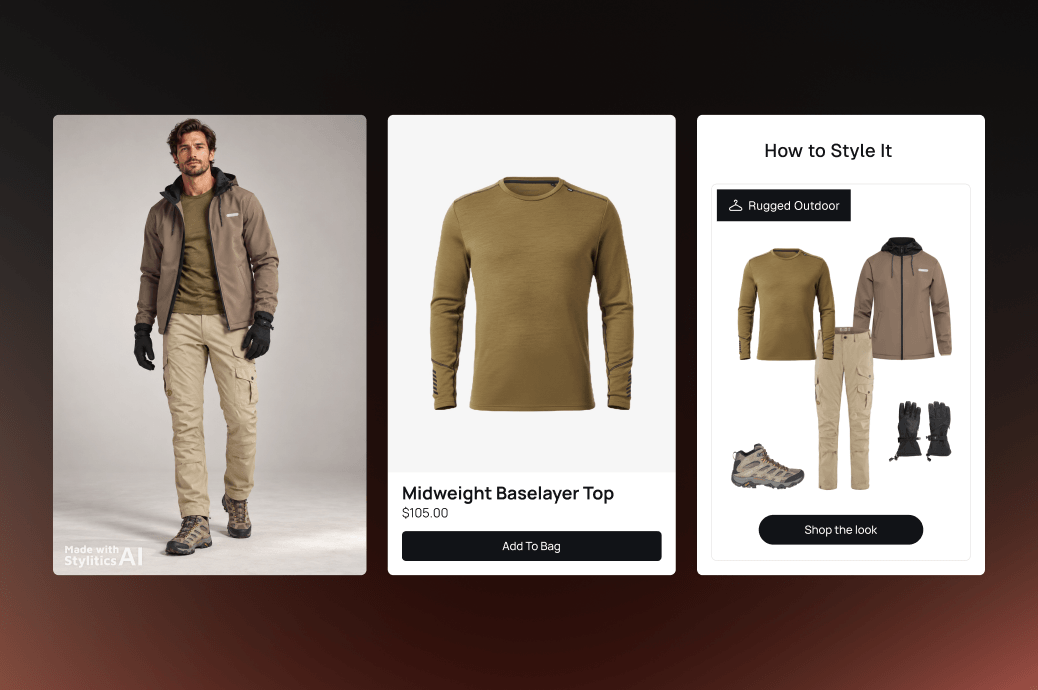
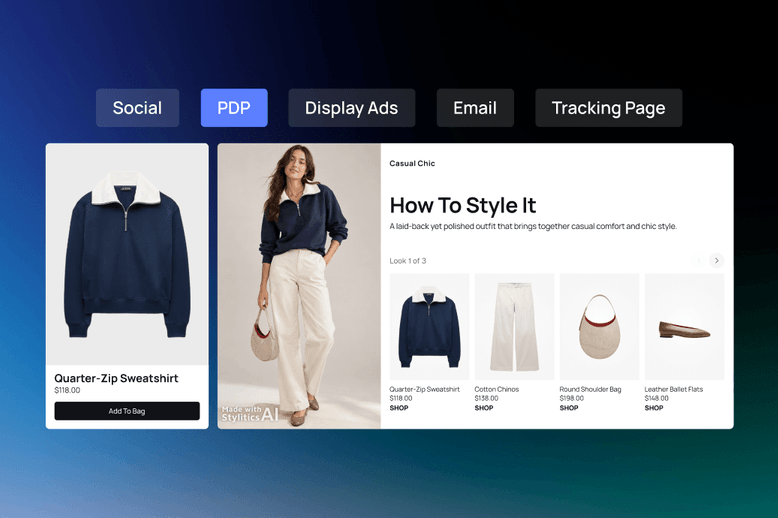
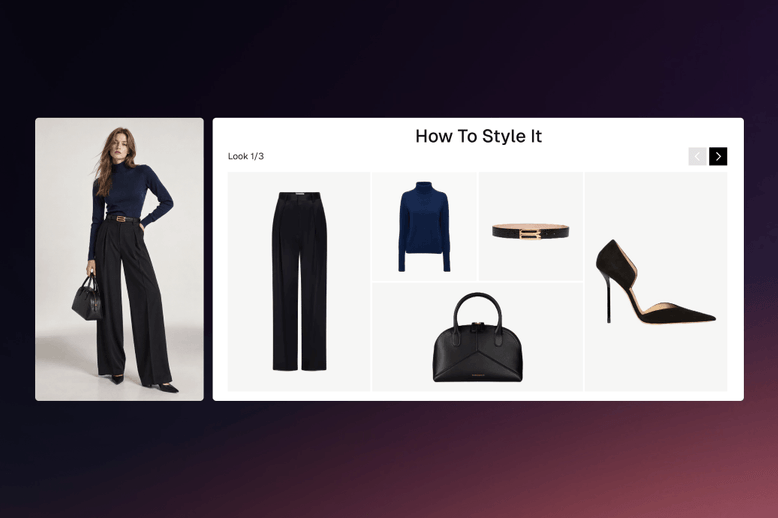
The product detail page is where intent is highest, so start there. If someone is looking at a hardshell, show the base layer, the fleece and the pack that complete the system, each with its own size picker, price and stock status. A shopper shouldn’t have to add the jacket, go back to search and guess which fleece fits under it.

The kit should also reflect the shopper’s experience level. Someone buying their first waterproof jacket needs a simpler, forgiving system. A returning alpine customer wants the technical upgrade. Complete the Look handles this on the PDP, and it extends past apparel to footwear, headwear and equipment.

Make Field Imagery Shoppable

Outdoor brands already shoot their gear where it gets used, on the trail, at camp and on the rock. Those images sell the whole rig, yet most stores treat them as decoration. Make every piece in the frame tappable and the campaign photo becomes a kit. Shop the Look does exactly this, breaking out each item in the image.

Image production is the catch, because field shoots are expensive and slow, so most of the catalog never gets an in-scene photo. Generative AI on-model imagery and AI background and scene changes close that gap, putting product into a mountain or campsite setting at a fraction of a shoot, with every image passing fashion-trained human QC before it goes live.

Curate Collections by Trip and Conditions

Category grids sort by product type, but nobody plans a trip that way. Collections built around a trip or a set of conditions, like “first overnight,” “shoulder-season day hike” or “wet-weather commute,” match how the shopper thinks. They also give the merchandising team a place to push full-price kits instead of markdowns.

Dick’s Sporting Goods used Stylitics to build featured shops at scale, grouping products into themed bundles such as home workout setups and a T-ball starter kit. The same logic transfers straight to a camp kitchen or a backcountry starter set.

Carry the Kit Into Email

Abandoned cart and browse emails usually show the one item left behind. That’s a reminder, not a reason to come back. Send the complete kit instead, assembled at send time against live inventory so nothing in the email is sold out. A shopper who left a tent in the cart is far more likely to return for the tent, pad and bag than for the tent alone.

Across all four surfaces, the rule is the same. Every piece in a kit must be in stock, available in the shopper’s size and sold on its own. A kit that breaks at checkout does more damage than no kit at all.

Dick’s Sporting Goods built themed bundles and featured shops at scale. Read the Dick’s Sporting Goods case study.

How Does Kit Merchandising Raise AOV and Cut Returns?

Retailers expect 19.3% of online sales to come back in 2025, against 15.8% across all channels (NRF, 2025). Kit merchandising attacks that number and order value at once, because both come down to whether the shopper bought the right combination the first time.

The clearest order value evidence comes from Huckberry, a menswear and outdoor gear retailer built around discovery, which integrated Stylitics outfitting through an API and put styled, shoppable looks on every product page. In the first half of 2025, shoppers who engaged with that content showed a 60% lift in average order value, a 60% lift in units per transaction and 9.3x higher revenue per session than those who didn’t (Huckberry case study, 2025). Huckberry also saw an 8.9x ROI from PDP outfitting. Across retailers, Forrester’s Total Economic Impact study of Stylitics found a 10% AOV increase.

Returns are the less obvious payoff, and in outdoor gear they’re often the bigger one. Some of the most avoidable outdoor returns are wrong-item returns. The fleece didn’t fit under the shell, or the pad didn’t fit the tent. That’s a compatibility failure, and a curated kit prevents it before checkout. Tighter return policies push the cost back onto the shopper and dent loyalty. Showing the right system up front fixes the cause instead.

Huckberry saw a 60% AOV lift from shoppers who engaged with outfits. Read the Huckberry case study.

Which Metrics Show Kit Merchandising Is Working?

Huckberry’s results were measured on four numbers, average order value, units per transaction, revenue per session and conversion rate (Huckberry case study, 2025). Those four, plus return reasons, are the scorecard we’d recommend for any outdoor kit program.

MetricWhat it tells youWhat to do when it moves
Average order value (AOV)Whether kits add full-price items to the basketIf AOV rises but margin falls, check that kits aren’t leaning on discounted add-ons
Units per transaction (UPT)Whether shoppers buy the system or just the anchorIf UPT stays flat, move the kit higher on the PDP or simplify it to three or four pieces
Revenue per sessionThe combined effect on traffic you already haveCompare engaged and non-engaged sessions to size the lift
Conversion rateWhether kits help shoppers decide or distract themIf conversion dips, cut kit size or tighten compatibility rules
Return reasonsWhether wrong-item and fit returns are fallingTag returns by reason and track “didn’t work with” separately

Read the numbers by category, because a tent kit and a layering kit behave differently. Use A/B testing and reporting tools to compare kit placements, sizes and imagery on matched traffic before rolling a change out across the catalog.

Getting Started With Outdoor Kit Merchandising

The fastest path is to pick one high-traffic category with an obvious system, such as shells or tents, and build kits around its top anchor products first. You’ll get a clean read on AOV and UPT without touching the rest of the catalog, and you’ll learn which compatibility rules your shoppers trust.

From there, follow the shopper’s path. Get PDP kits right, then make field imagery shoppable, then build trip and conditions collections, then carry kits into email. Each step reuses the same compatibility logic, so the work compounds. If you sell footwear too, the footwear ecommerce merchandising playbook covers the same idea for shoes.

See how AI outfitting builds compatible kits for outdoor catalogs. Request a demo.

FAQs About Outdoor Gear Ecommerce Merchandising