Stylitics vs Zelig: Interactive Styling or Outfitting at Scale? Stylitics vs Zelig: Interactive Styling or Outfitting at Scale?

Stylitics vs Zelig: Interactive Styling or Outfitting at Scale?

Stylitics Marketing Team

The Stylitics Marketing Team explores the intersection of AI, retail, and shopper experience, sharing strategies and insights that shape the future of product discovery and visual merchandising.

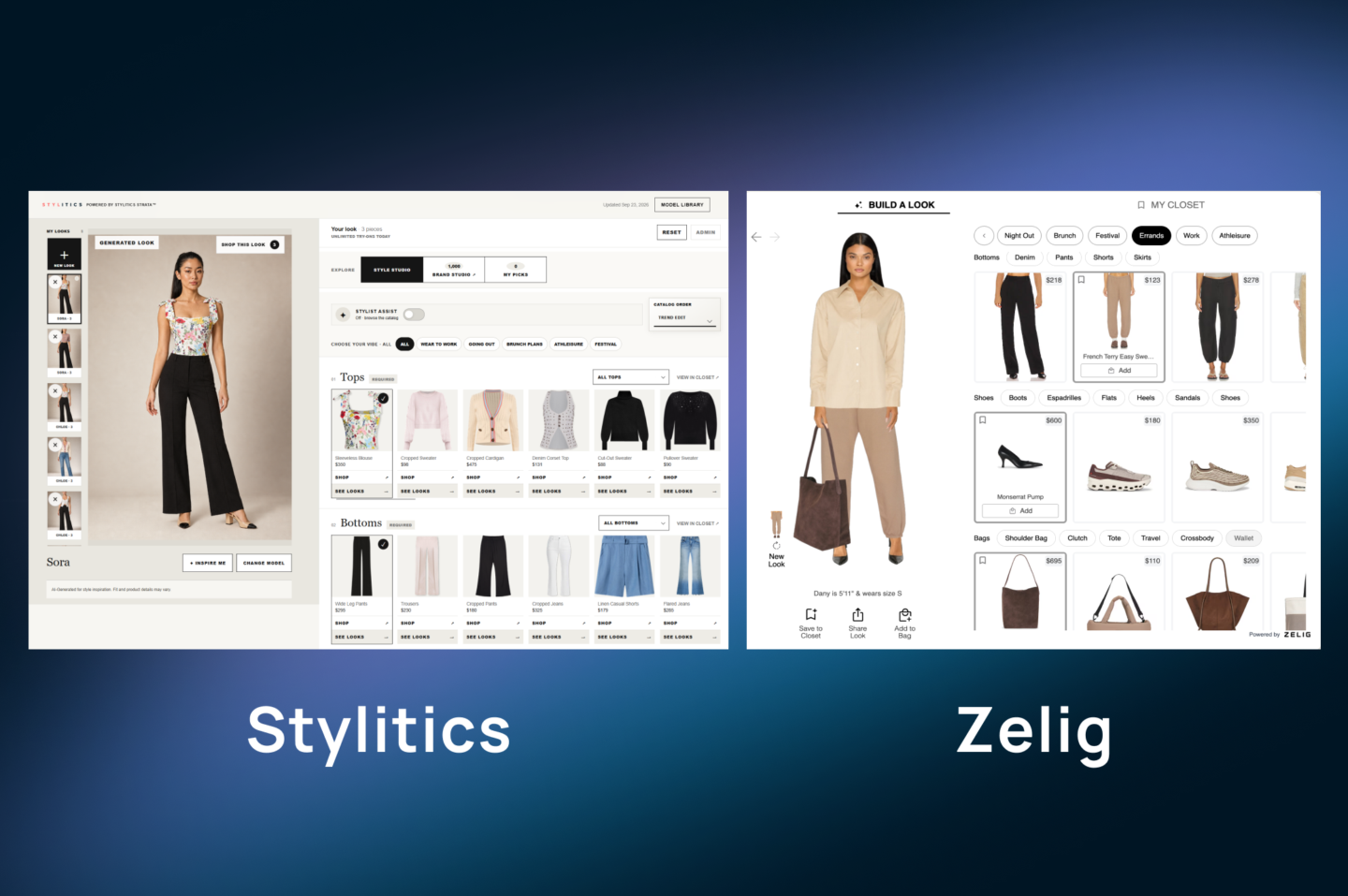
Stylitics and Zelig both help shoppers buy complete outfits instead of single items, but they’re built for different jobs. Zelig’s Build a Look asks shoppers to do the styling themselves by picking an anchor piece and assembling an outfit around it on a virtual model. Stylitics is a retail AI platform that automates, governs, personalizes and tests outfitting across the entire customer journey. It then extends the same infrastructure into AI imagery and catalog enrichment.

So the useful question for a fashion ecommerce leader isn’t which tool makes better outfits. It’s whether your biggest constraint is shopper engagement inside one styling experience, or merchandising output across a large catalog, many surfaces and a team that needs control over what shoppers see.

Key Takeaways

  • Stylitics has run outfitting in production for more than a decade, across hundreds of retailers and 500+ deployments, with A/B testing built into the platform. Zelig launched commercially in late 2023 and names REVOLVE as its flagship deployment, but REVOLVE uses Zelig for a single feature and still relies on Stylitics for the rest of its outfitting and bundling.

  • Zelig is built around a shopper-led styling session, while Stylitics is built around merchandiser-governed outfitting that runs automatically on every surface.

  • Zelig positions itself for fashion, including contemporary brands, luxury houses and marketplaces. Stylitics runs outfitting for apparel, footwear, beauty, home, outdoor, kids and department stores.

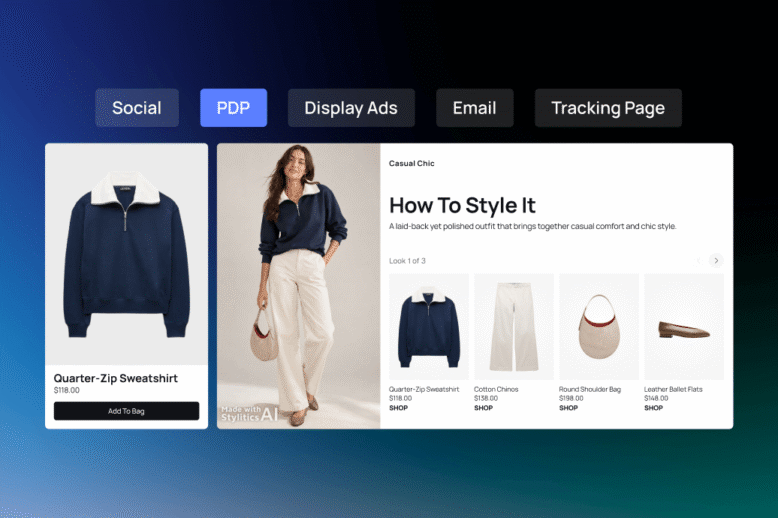
  • Stylitics gives retailers a range of outfitting formats, including Complete the Look, Shop the Look, Styled for You, Shop Similar and shoppable galleries, and runs them on product pages, category pages, email and apps. Zelig’s product is Build a Look, a single experience that retailers place on product pages, category pages and landing pages.

How are Stylitics and Zelig different?

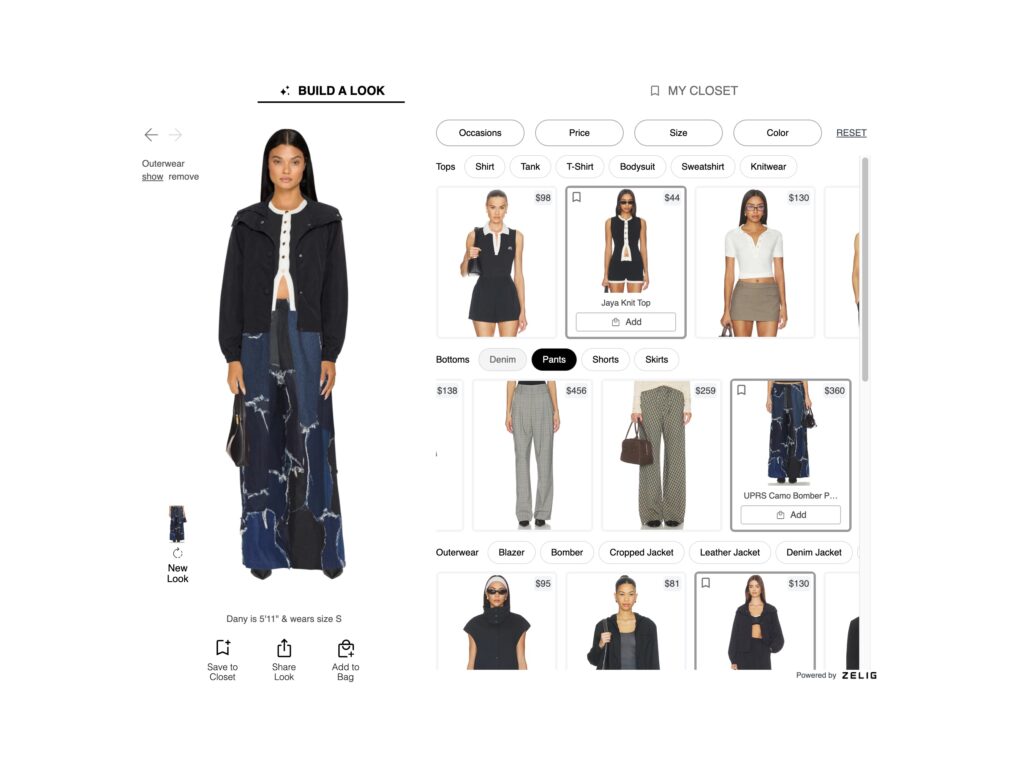
Zelig describes itself as an AI commerce platform for fashion. Its Build a Look tool is the core of the product, supported by a Digital Closet where shoppers save outfits and purchased pieces, along with styling rules and shopper interaction data that shape recommendations. Zelig launched commercially in late 2023, so there are few live examples in the market so far. Its flagship deployment is REVOLVE, where shoppers mix and match items on a model and watch the look change as they swap in different shoes, bags and layers.

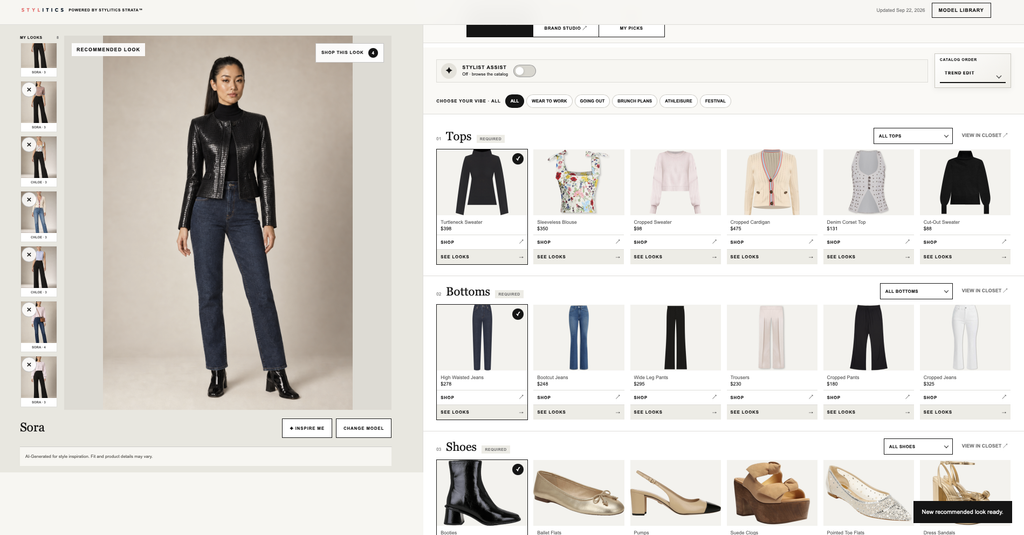
Stylitics starts from a different premise. Most shoppers on a product page want a finished look served to them rather than a self managed styling session, so the platform does the styling at catalog scale, under rules the merchandising team sets. Those looks appear on product pages, category pages, galleries, email and apps. Stylitics also runs AI Image Studio for on-model product imagery and Catalog Enrichment for attribute data and search, so the outfitting engine, the images and the product data all come from one platform.

Stylitics vs Zelig at a glance

DimensionStylitics Zelig
Core product offeringRetail AI platform with outfitting and bundling as a core product suiteBuild a Look, a shopper-driven styling feature
How outfits are createdGenerated automatically, governed by merchandiser rules and personalized to each shopperBuilt by the shopper in real time around an anchor item, mixing and matching pieces and asking for recommendations within stylist rules.
Primary usersEcommerce, merchandising, creative and product teams at retailers and brandsFashion ecommerce and digital product teams
Retail categoriesApparel, footwear, accessories, athletic, luxury, beauty, home, outdoor, kids, swim and department storesFashion, with dedicated positioning for contemporary brands, luxury and marketplaces
Product breadthAI Outfitting and Bundling, AI Image Studio, Catalog Enrichment, the Optimization Suite, AI Labs and Strata data infrastructureBuild a Look, Digital Closet and styling intelligence

How do the two platforms compare feature by feature?

The table below describes how each one handles the capabilities retail teams ask about most.

Stylitics vs Zelig capability comparison

CapabilityStyliticsZelig
Styling approachAutomated outfit generation across the full catalog, trained on a decade of stylist-curated outfitting dataShopper-led, with Zelig building a look around whatever item the shopper taps and the shopper swapping pieces from there
Merchandiser controlNo-code product boosts, SKU exclusions, overrides, and item prioritization that teams can change as often as strategy changesZelig says retailers and stylists define merchandising and styling rules. 
PersonalizationStyled for You uses shopper profiles plus browse and purchase signals to personalize outfitsDigital Closet uses saves, favorites, purchases and styling behavior to shape recommendations
Where outfits appearProduct pages, category pages, galleries, checkout, email, SMS, apps and socialProduct pages, category pages, dedicated landing pages, email and paid social
On-model imageryAI Image Studio produces generative AI on-model imagery, colorway images and scene swaps for PDPs and campaigns, with fashion-trained human quality control on every imageRenders garments on models inside Build a Look so shoppers can see the outfit. No standalone imagery production product is publicly positioned
Catalog and search dataCatalog Enrichment fills attribute gaps and sharpens on-site search resultsNot publicly positioned as a separate product
Testing and measurementBuilt-in reporting, analytics and A/B testing through the Optimization Suite, with 100+ A/B tests run each yearReports performance from shopper interaction data and control-group comparisons in its REVOLVE deployment
IntegrationA UI component library for out-of-the-box deployment, with extensive configuration options, supporting SDKs and APIs, and no new data required since it runs on your existing product catalog filesA styling layer added through a single front-end script, with support for most ecommerce platforms
Enterprise scaleHundreds of retailers, 500+ deployments and 30B annual page viewsOne primary deployment at REVOLVE.

Which platform fits your use case?

Neither platform is the right answer for every retailer. Here’s how we’d map the scenarios we hear most often, including the one where Zelig’s model is the natural fit.

Use-case fit

ScenarioStronger fitWhy
You sell across luxury apparel, footwear, beauty,home decor, accessories or athletic products.StyliticsOutfitting and bundling logic covers categories beyond fashion, including complete-the-room bundles for home brands
Your merchandisers adjust styling around campaigns, inventory and margin every weekStyliticsBoosts, exclusions and overrides are no-code and built for daily merchandiser use
You want a complete look on every product page without asking shoppers to build itStyliticsOutfits generate automatically across the catalog and render in Complete the Look and Shop the Look modules
Your long-tail products or secondary colorways lack on-model imageryStyliticsAI Image Studio creates on-model images from flat lays and every colorway from a single reference shot
You run a multi-brand store and need consistent styling across labelsStyliticsOutfitting runs at department store scale, with rules that keep cross-brand looks on strategy
You want outfitting, imagery and product data from one vendorStyliticsAll three run on the same platform and share the same catalog intelligence
You want a dedicated build-your-own-outfit destination for a fashion-forward audienceZeligInteractive, shopper-led styling is the product Zelig is built around

What does the difference look like on a product page?

Zelig

Picture a shopper opening Zelig’s Build a Look on a green cardigan. The cardigan is on a model, surrounded by rows of tops, bottoms and outerwear, each split into more chips, with filters for occasion, price, size and color above them. Every item the customer taps changes the outfit, so a single cardigan can lead to dozens of decisions before anything goes in their bag. Shoppers who love to experiment will enjoy that. Most shoppers on a product page came for one item, and a wall of options gives them more reasons to hesitate and leave.

Stylitics

J.Crew and Madewell already had the inspiration part solved. What they lacked was a way to let a customer buy the look in the photo. Stylitics made their editorial photography shoppable, so a customer viewing a styled campaign image can add the whole outfit without hunting for the pieces. The same styling engine puts complete looks on every product page and sends them out through triggered email, and it runs on the brands’ own aesthetic rather than a generic recommendation grid. One in five customers on a J.Crew product page now add an item to cart straight from the Stylitics outfit module.

“Stylitics has unlocked a new way for us to represent our style point of view and inspire our customers to shop the full outfit. It’s intuitive and engaging, adding dimension to our shopping experience while driving meaningful impact to our business.”

Ruchika Julapalli, SVP Digital Experience & Technology, J.Crew Group

Many retailers will want some of both. Browsers who love to experiment exist on every fashion site, but they’re a fraction of the traffic that lands on a PDP, and the rest of that traffic still needs a reason to add a second item.

What results do retailers see with Stylitics?

Retailers running Stylitics outfitting report gains in basket size and conversion across very different catalogs.

Stylitics outfitting results

RetailerResult
J.Crew & Madewell20% of J.Crew’s PDPs now add an item to cart from the Stylitics outfit module
Huckberry60% lift in average order value
Suzanne’s5.67x revenue per session
Rhone39% increase in average order value
JD SportsStyled bundles drive 50% of widget revenue
PUMA2 to 3x increase in conversion rate
Forrester Total Economic Impact study10% AOV lift and 563% ROI for a composite Stylitics customer

“Stylitics has helped us bridge the gap between our online and in-store experience, creating a path to product discovery and inspiring our customers with premium, curated looks.”

— Emily Heger, Director, Digital Product at Rhone

See more outcomes in our case study library, or read how Stylitics compares with another outfitting vendor in Stylitics vs FindMine.