The Stylitics Marketing Team explores the intersection of AI, retail, and shopper experience, sharing strategies and insights that shape the future of product discovery and visual merchandising.
AI imagery is rapidly becoming a practical complement to traditional photography, helping fashion retailers expand on-model coverage, improve visual consistency, and accelerate content workflows.
The strongest platforms pair image generation with retail infrastructure — product data, styling logic, brand rules, and quality controls, ensuring outputs are accurate, realistic, and aligned with merchandising needs.
Not all AI tools are built for enterprise use, so retailers should evaluate accuracy, brand control, workflow integration, and operational fit, not just image quality when selecting a partner.
The fashion industry moves fast, but visual merchandising has traditionally struggled to keep pace. Traditional fashion photography is costly, slow, and difficult to scale, especially when photographers and merchandising teams must create dynamic, on-model imagery for every SKU and colorway. Flat lays and basic product photos simply cannot meet today’s expectations for fit, context, and inspiration.
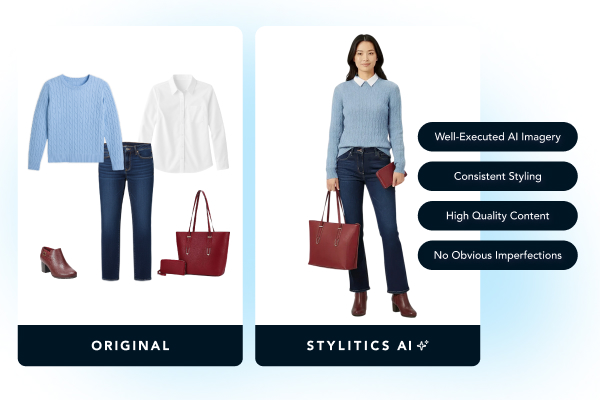
New AI tools are changing this. Powered by artificial intelligence, computer vision, 3D modeling, and generative AI, these platforms can create AI models and turn standard product photos into on-model product shots, AI images, and lifestyle scenes for PDPs, PLPs, and marketing campaigns. This gives retailers a more scalable approach to ecommerce photography while helping close the gap between what shoppers want to see and what teams can realistically produce.
But not every AI fashion photography solution is built for retail-grade use. Many AI fashion model generators stop at novelty but fall short on the accuracy, realism, and brand control required for enterprise ecommerce. We evaluated more than 20 AI imagery platforms across performance, realism, scale, and integration capabilities. The tools below represent the best AI imagery solutions for fashion retail today.
AI Image Generation Comparison
Software
Best For
Key Features
Stylitics
Enterprise on-model imagery & AI outfitting
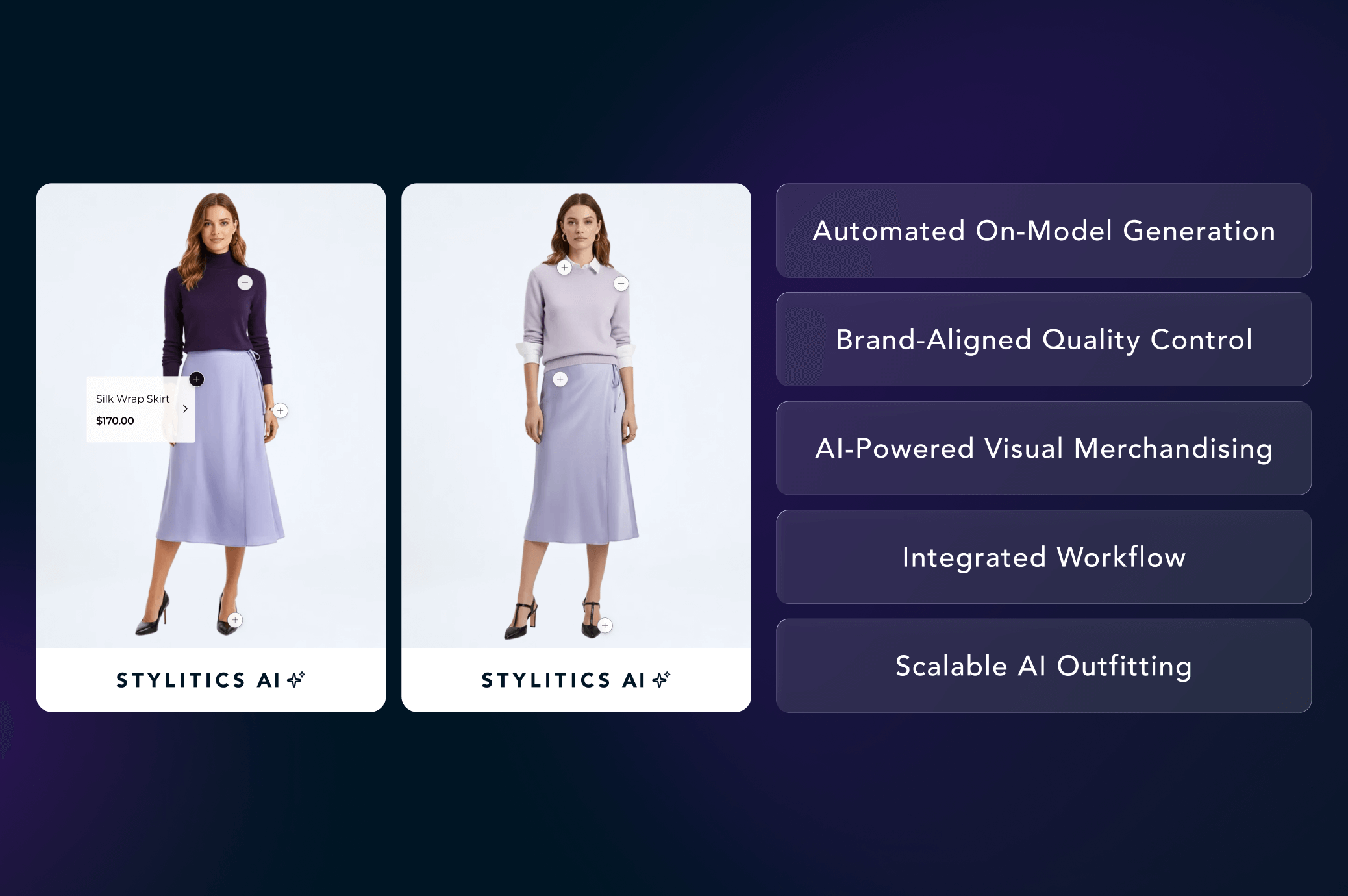
Automated on-model generation, AI outfitting, retail-grade AI infrastructure
Vue.ai
Composable ecommerce platforms
AI model generation
Style3D
Digital fashion design & 3D workflows
3D garment design, virtual sampling
Botika
AI photoshoots for DTC & mid-sized brands
On-model photography automation
Photoroom
Quick on-model shots for small businesses
AI Models, background editing, batch processing
Claid.ai
E-commerce image enhancement & automation
AI background generation, model placement, image upscaling
FASHN.ai
AI-powered virtual try-on (VTO)
Virtual try-on API, realistic draping, fit simulation
How to Choose the Best AI Imagery Tool for Fashion Retail
Choosing an AI platform for fashion photography requires looking beyond basic image generation. The best AI platforms combine visual quality with the retail infrastructure, controls, and workflows needed to support enterprise use.
Image Quality & Garment Fidelity
The platform must render drape, texture, fit, and color with high garment fidelity. Even small inaccuracies can affect shopper trust. In AI fashion photography, retailers should prioritize tools that consistently reproduce fabric behavior, pattern scale, and product details in a realistic way.
Scalability, Integration & Ecommerce Workflows
Retailers need AI platforms that connect cleanly to existing CMS, PIM, DAM, and merchandising systems. Consider how well each tool supports ecommerce workflows, from product setup and image creation to product discovery, styling, and publishing.
Brand Control & Governance
Enterprise-ready platforms need clear guardrails: consistent output, controlled styling logic, and adherence to brand standards. Fashion-trained AI should support responsible model generation and fair representation while maintaining the visual consistency retailers expect.
Workflow Speed, Retouching Workflows & Automation
Efficiency matters. The best tools support automated production and retouching workflows that reduce manual effort, streamline QA, and fit naturally into existing pipelines. These capabilities can help retailers scale fashion content production without sacrificing image quality or brand control.
Rather than focusing solely on cost per image, consider how the platform affects overall content production costs, image production turnaround time, and production cycles. Look for evidence of where it saves time, reduces friction, and complements traditional photography. Case studies and pilot learnings can help clarify fit.
Stylitics: Enterprise AI Fashion Photography Visual Merchandising
Stylitics is an enterprise AI platform for fashion photography, digital outfitting, and visual merchandising. It is actively exploring how AI-generated on-model imagery can fit into a broader retail workflow. Built on retail-focused AI infrastructure—the same system behind Stylitics’ outfitting, bundling, and data-enrichment modules—the platform brings together product data, styling logic, and quality controls in a way that generic image generators do not. Rather than functioning as a standalone creative tool, Stylitics integrates on-model imagery, enrichment, and outfitting within a unified merchandising environment designed for complex retail catalogs and ecommerce workflows. This allows brands to test how AI fashion photography can complement traditional photography while maintaining accuracy, consistency, and brand alignment.
Automated On-Model Generation: Transforms flat-lay product images into on-model visuals guided by fashion-specific AI, helping fill gaps where traditional photography is limited.
Brand-Aligned Quality Control: Hybrid AI + human QA workflows evaluate lighting, drape, color, and realism to keep outputs aligned with brand standards at scale.
AI-Powered Visual Merchandising: Stylitics is not just an AI photo generator; it is a retail infrastructure layer that supports fashion content production across PDPs, PLPs, and campaigns.
Integrated Workflow: Connects to existing retail systems and supports ecommerce workflows across PDPs, PLPs, email templates, and marketing channels without requiring custom builds.
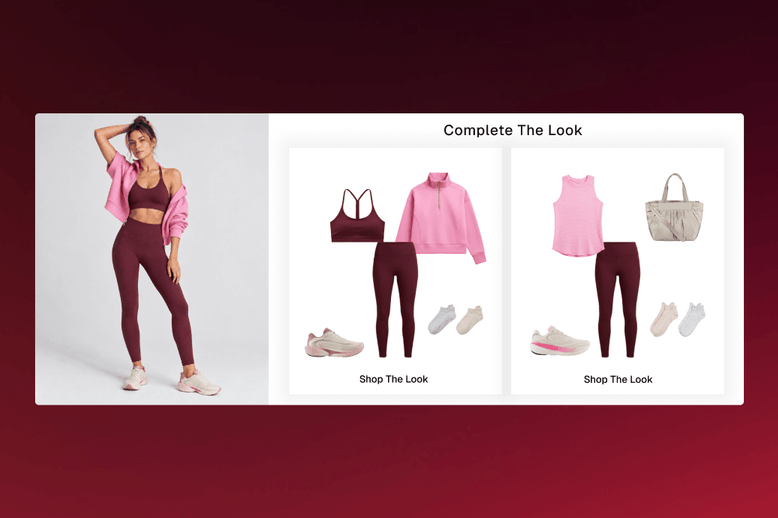
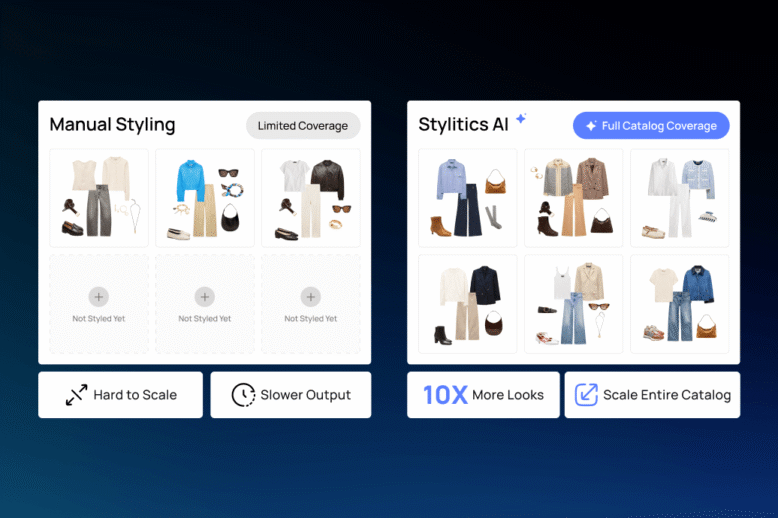
Scalable AI Outfitting: Goes beyond single product imagery to generate full, shoppable looks for every colorway, extending content to category pages, emails, and marketing campaigns automatically.
Designed for enterprise retail workflows and large, dynamic catalogs.
Proven ROI – brands like Rhone achieved 10x ROI and a 39% AOV lift with Stylitics’ AI-powered visual merchandising.
Integration with Shopify Plus, Salesforce Commerce, and major retail systems.
Provides strong brand governance and controlled output workflows.
Built for enterprise retailers; not ideal for small sellers or micro-catalogs.
Stylitics offers custom enterprise pricing based on catalog structure, image volume needs, and the modules included in the program.
Apparel, footwear, and lifestyle retailers looking for an enterprise-level approach to AI imagery that pairs on-model visuals with outfitting, product data, and brand governance rather than simple image generation.
Vue.ai: AI for Product Detail Page Automation
Overview
Vue.ai is an AI fashion photography platform and one of several AI fashion model generators aimed at fashion brands. It combines computer vision, product tagging, and design models to create AI models for individual products. The system can turn basic product photos into AI images and on-model product shots, while supporting background removal and brand-aligned updates for product detail pages.
Generates AI images and on-model product shots from basic product photos.
Supports background removal for clean, shoppable imagery.
Integrates with product information management (PIM), digital asset workflows, and broader ecommerce workflows.
Includes predictive analytics and trend forecasting layers to help improve campaign planning.
Strong ecommerce integration options.
A mature enterprise platform with established retail case studies.
Offers built-in AI tools for personalization, product tagging, and PDP automation.
Offers limited creative flexibility compared to Stylitics’ advanced outfitting engine.
Pricing
Enterprise pricing is available upon request.
Retailers focused primarily on product image automation and AI-driven PDP enhancement rather than creative outfitting, bundling, or advanced visual merchandising.
Style3D: The Digital Fashion Design & 3D Workflow Platform
Style3D is a digital fashion design and 3D workflow platform that enables brands to create, visualize, and iterate on garments in a virtual environment. It focuses on digital sampling, garment development, and garment fidelity rather than live ecommerce photography. For retailers comparing AI fashion photography tools, Style3D is better suited to design and production teams than to teams looking for a PDP-ready image generator.
Advanced 3D Design Capabilities: Creates true-to-life apparel visuals with fabric simulation, physics, and the garment fidelity needed for design validation.
Digital Sampling & Fit Validation: Allows designers to test fit, drape, and movement on virtual avatars, significantly reducing the need for physical prototypes.
AI Texture Generation: Leverages AI to create and apply realistic fabric textures and material properties for enhanced garment visualization.
Seamless Digital Fashion Workflow: Integrates with manufacturing and PLM systems to connect digital design to physical supply chains and shorten production cycles.
Reduces material waste and physical sampling costs
Speeds up design and development cycles
Highly realistic visualization for design and production teams
Steep learning curve for teams new to 3D design software.
Primarily a B2B design tool, not an e-commerce imagery generator for live retail sites.
Style3D offers custom subscription plans tailored to the needs of design teams and enterprises. Pricing details are available upon request for a personalized quote.
Fashion designers, manufacturers, and large retailers are looking to adopt digital sampling and 3D visualization to make their design and production processes more sustainable and efficient.
Botika: AI Photoshoots for Modern Brands
Botika is an AI fashion photography platform and one of several AI fashion model generators aimed at modern fashion brands. It helps teams convert plain product photos into studio-grade AI images with on-model visuals, using AI Clothes Changer technology and virtual garment visualization to simulate fit and drape across diverse AI models. The result is a scalable alternative to traditional photoshoots for brands that need faster ecommerce photography and fashion content production.
AI-driven On-Model Generation: Creates on-model visuals for both men’s and women’s apparel with a focus on diversity and inclusivity.
Automated AI Photoshoot Process: Supports an AI Photoshoot workflow with consistent lighting, poses, and settings across an entire product line.
AI Background Remover: Helps teams remove background elements, customize scenes, and create cleaner product imagery.
Built-in 3D Visualization Tools: Enhances images with a sense of depth and realism.
Rapid image creation without the logistical challenges or costs of physical models.
Cost-efficient for direct-to-consumer brands or mid-sized retailers.
Lacks the full enterprise-grade scalability or integrated personalization offered by Stylitics.
Primarily a standalone creative tool, not a comprehensive merchandising platform.
Botika offers custom pricing, with flexible pay-per-image options available for smaller projects. Small to mid-size fashion ecommerce teams, boutique apparel brands, and agencies that want to accelerate their product photography workflow while maintaining strong visual consistency.
Photoroom: Instant AI Models for E-commerce
Photoroom is a user-friendly photo-editing application and a simple entry point into AI fashion photography. It lets sellers place apparel images on AI models quickly, creating AI images and on-model product shots without a large budget or technical expertise. The tool is geared toward small businesses and individual entrepreneurs that need fast, professional-looking visuals for ecommerce.
Instant AI Model Generation: Upload a flat-lay product image and the tool automatically generates AI models wearing the item.
Easy Background Editing: Lets users remove background elements, replace scenes, or generate AI backgrounds.
Batch Processing: Supports batch processing so teams can update multiple product images more efficiently.
Mobile-First Design: A highly accessible tool that can be used directly from a smartphone.
Extremely easy to use, with a minimal learning curve.
Very affordable pricing plans.
Fast turnaround time for creating basic on-model shots.
Limited control over model poses, styling, and expressions compared to enterprise solutions.
Realism may not meet the standards of high-end fashion brands.
Photoroom offers a free plan with limited features. Paid plans start at approximately $9.99 per month, with options for teams and businesses. Etsy sellers, social media marketers, and small ecommerce businesses that need a quick, affordable way to create on-model imagery and improve product listings.
Claid.ai: AI Image Enhancement for Ecommerce Photography
Claid.ai Studio focuses on AI background magic and clothing-on-model automation, turning static product shots into more engaging ecommerce images. It uses AI texture generation and background customization to improve existing photo assets, offering a practical option for teams that need faster image enhancement and stronger visual consistency.
Clothing on Models Module: Automatically adds garments onto a diverse selection of AI models.
Photo Enhancement Suite: Includes tools for creating high-resolution images, lighting correction, and color adjustment.
AI Background Remover & Generator: Supports background removal and background generator tools for clean product images and custom AI-generated scenes.
Cloud-based Batch Processing: Supports batch processing for large image volumes and faster image production turnaround time.
Quick and inexpensive for creating basic product imagery.
Easy integration with existing ecommerce platforms via API.
Visual realism can vary, and there is limited control over styling context.
Lacks deeper fashion-specific capabilities like fit validation or product bundling.
Claid.ai offers a free trial, with pay-as-you-go and subscription plans starting from around $33 per month, making it accessible for various business sizes.
Smaller retailers, creative teams, and marketplaces needing fast AI-generated model images and general photo enhancements without heavy setup or investment.
FASHN.ai: AI-Powered Virtual Try On for Fashion Retail
FASHN.ai specializes in AI-powered virtual try on, providing API access that lets retailers integrate realistic try-on experiences into websites and apps. Unlike platforms that generate static AI images for product pages, FASHN.ai focuses on interactive customer engagement, helping shoppers see how garments may fit on models that better reflect their own body type.
AI Clothing Try-On API: Provides developer-friendly API access for seamless integration into ecommerce platforms and workflows.
Realistic Garment Draping: Uses advanced algorithms to simulate how different fabrics and styles may drape across various body shapes.
Model Customization: Lets shoppers select models with different heights, sizes, and shapes to get a better sense of fit.
Generates Virtual Try-On Images: Creates a visual representation of clothing on a chosen model, helping shoppers bridge the imagination gap.
May help retailers address fit uncertainty, with the potential to support conversion and reduce return risk.
Highly specialized in virtual try on technology.
Requires development resources to integrate the API.
Serves a different purpose than AI fashion photography and on-model imagery generators for product pages.
FASHN.ai offers subscription-based pricing based on usage and API calls. Custom enterprise quotes are available for high-volume retailers.
Forward-thinking fashion brands and retailers that want to invest in an interactive virtual try on experience to enhance customer engagement and reduce returns.
Comparison: What Sets Stylitics Apart
Most AI imagery tools focus on generating individual images. Stylitics differentiates itself by treating AI fashion photography as part of a broader retail merchandising system rather than a standalone creative feature. Its strength comes from integrating product data, styling logic, and quality controls built specifically for fashion ecommerce.
Retail-Grade Infrastructure
Most AI imagery tools focus on generating individual images. Stylitics differentiates itself by treating AI fashion photography as part of a broader retail merchandising system rather than a standalone creative feature. Its strength comes from integrating product data, styling logic, and quality controls built specifically for fashion ecommerce.
Retail-Grade Infrastructure
Stylitics operates at enterprise scale, connecting AI-generated imagery to the retail systems that power its outfitting, enrichment, and personalization modules. This helps keep visuals aligned with product data, brand guidelines, and merchandising rules across large, dynamic product catalogs and ecommerce workflows.
Data-Driven Accuracy
Instead of relying solely on generative outputs, Stylitics incorporates computer vision, product attributes, and confidence scoring to help preserve garment fidelity across fabric drape, fit, color presentation, and styling. Images that do not meet internal quality thresholds can be flagged for review.
On-Model + Outfit Synergy
While many tools stop at single-image generation, Stylitics blends on-model shots with its outfitting engine. This allows retailers to pair product imagery with full-look styling, bundling logic, and contextual merchandising across PDPs, emails, and category pages.
Different from Virtual Try-On
Virtual try on platforms simulate clothing on a shopper or avatar for interactive fit exploration. Stylitics serves a different purpose: helping retailers generate brand-approved, merchandising-ready on-model product imagery that fits into existing retail workflows. Virtual try on supports personal shopping experiences; Stylitics supports scalable visual merchandising.
Implementation & Timeline
Timelines vary based on catalog structure, existing systems, and the desired image production turnaround time. Most brands begin with a focused pilot to evaluate image quality, ecommerce workflows, production cycles, and internal requirements before expanding into broader use cases.
Pricing
Enterprise pricing is typically customized around catalog size, imagery needs, and the specific modules a retailer chooses to use. Many partners start with a narrow set of categories or channels and scale investment as they gain confidence in the results.
Scale & Operational Fit
As retailers explore AI-generated imagery, considerations often include how the system handles product updates, regional variations, and ongoing content needs. Stylitics focuses on helping teams understand where AI imagery complements existing photography, how it fits into current merchandising workflows, and what infrastructure is needed to support long-term accuracy and consistency.
Get Started with Stylitics
AI-generated imagery is becoming an important area of exploration for fashion retailers as they look for new ways to expand visual coverage and improve consistency across product pages and marketing channels. Many teams are testing how AI on-model assets can complement traditional photography, support styling workflows, and help provide clearer information and inspiration to shoppers.
Stylitics brings AI imagery into a broader retail context, connecting on-model generation with outfitting, product data, and enrichment workflows to help retailers evaluate where this technology fits within their end-to-end merchandising strategy.
If you’re interested in seeing early samples or learning how retailers are approaching pilots, we can walk through options and discuss where AI imagery may support your visual and operational goals.
Frequently Asked Questions
AI imagery refers to the use of generative AI and computer vision to create on-model or styled product visuals from standard product photos. Retailers are exploring it as a way to expand visual coverage, provide clearer information about fit and drape, and complement traditional photography on PDPs and PLPs.
AI fashion models generate static or styled images for merchandising and marketing—similar to traditional on-model photography. The goal is to produce high-quality, shoppable images at scale. In contrast, virtual try-on tools like FASHN.ai or FitRoom use AR to interactively simulate clothing on a shopper’s own image or a customized avatar. Stylitics focuses on the former, supporting ecommerce imagery and outfitting workflows rather than consumer-facing AR experiences.
Advanced AI platforms can produce highly realistic visuals, but results depend on image quality, garment fidelity, and quality-control processes. The key is accurately representing lighting, drape, texture, color, and fit, with strong guardrails and human oversight.
Not entirely. Traditional photography remains important for establishing accurate fit, color, and baseline product representation. Stylitics is exploring AI fashion photography as a complementary capability for expanding on-model coverage, filling content gaps, and testing new styling concepts.



 Shop the Look Let shoppers buy the full outfit directly from any styled image.
 Styled for You Personalized outfit recommendations based on individual shopper preferences.
 Complete the Look Suggest complementary pieces to round out whatever a shopper is already viewing.
 Shop Similar Surface visually comparable alternatives when a specific item is out of stock or out of budget.
 Flat Lay to Model Choose from diverse models with full control over pose, crop, and framing.
 Background & Scene Swaps Place products in clean studio backgrounds, lifestyle environments, or custom lighting moods.
 AI Colorway Swaps Create photorealistic images for every colorway from a single reference shot.
 Model Diversity & Inclusive Imagery Output-ready formats for PDPs, social platforms, and campaign lookbooks.