Why AI-Generated UGC-Style Content Is Retail’s Best Kept Secret
Stylitics Marketing Team
The Stylitics Marketing Team explores the intersection of AI, retail, and shopper experience, sharing strategies and insights that shape the future of product discovery and visual merchandising.
User-generated content has become one of the most strategically valuable creative formats in retail marketing—and one of the most operationally problematic to source reliably. UGC-style imagery looks real and consistently outperforms polished studio content in social engagement and paid social conversion metrics. Shoppers trust content that appears to come from people like them more than content that comes from professional photographers.
The problem is supply. Organic UGC is unpredictable in volume, inconsistent in quality, unreliable in brand alignment, and impossible to scale across a full product catalog. Brands can run UGC campaigns, repost customer content, and incentivize photo sharing—but they cannot guarantee that every product in their catalog has UGC-style content ready when they need it. The result is a channel strategy that depends on an input it cannot control.
Key Takeaways
UGC-style content consistently outperforms polished studio imagery in social engagement and paid social conversion—AI generation makes this aesthetic available at catalog scale.
AI-generated UGC-style imagery provides the informal look of real customer content with full brand safety, consistent quality, and on-demand availability.
The same product asset that generates PDP studio imagery can produce UGC-style variants, social editorial crops, and lifestyle scenes simultaneously—without additional production cost.
Brands are actively rejecting overly polished, unrealistic imagery in favor of models and content that reflect how real shoppers look and live—AI makes that shift operationally viable.
AI-generated UGC fills the organic content gap that leaves most brands under-resourced on social, enabling consistent publishing frequency and real creative A/B testing.
Virtual try-on style imagery, showing products on diverse, relatable models, combines the relatability of social-style content with the fit confidence shoppers need to convert and keep what they buy.
Stylitics AI Image Studio changes the supply equation. By generating UGC-style imagery from the same product assets used for studio PDP imagery, retailers can produce a content library at scale—available for every product, on every channel, on any timeline, with complete brand safety and quality consistency.
“Organic UGC is unpredictable. AI-generated UGC-style imagery gives brands the social-native variety they need, on demand. That changes the content strategy entirely.”
Why UGC Style Converts—and Why It Is Hard to Source
The conversion premium of UGC-style content is well established. In paid social advertising, UGC creative formats consistently outperform polished studio assets in click-through and conversion rates. In organic social, posts that feature UGC-style imagery drive higher engagement than campaign-quality photography. The explanation is intuitive: shoppers apply less skepticism to content that appears to come from peers than to content that clearly comes from a brand’s marketing department.
But organic UGC has serious limitations as a content strategy. Volume is unpredictable—a well-loved product may generate abundant UGC while an equally good product in a quieter category generates almost none. Quality is inconsistent—some customer photos are genuinely compelling, while others are unusable. Brand alignment is uncertain—customers photograph products in contexts and combinations that the brand would not choose. And at catalog scale, the odds of having usable organic UGC for every product that needs it are vanishingly small.
These limitations mean that most brands use organic UGC opportunistically rather than strategically—reposting the best customer content when it appears, but not relying on it as a primary channel supply. AI-generated UGC-style imagery removes the supply constraint while preserving the aesthetic and conversion properties that make the format valuable.
Brands Are Actively Rejecting Overly Polished Imagery
The shift toward UGC-style content is not just a marketing trend—it reflects a fundamental change in what shoppers respond to and, increasingly, what brands themselves want to project. The polished, aspirational studio aesthetic that defined fashion ecommerce for two decades is losing ground to imagery that feels relatable, representative, and real.
The signal is coming directly from brands. As one Stylitics representative described in a recent prospect conversation with a fashion brand:”One of the most common things that we’ve run into recently is brands telling us, ‘We don’t want the fake look.’ Not everybody has that overly polished, editorial-only aesthetic in their catalog—and they don’t want it.”
The rejection of unrealistic imagery extends to model representation. As one Stylitics team member noted during a recent conversation with a menswear brand:
“People want to see clothing on models that reflect what they look like. In the context of age, ethnicity, body size, skin color… they’re looking at a shirt, like ‘that doesn’t really match my complexion.'”
This is where polished studio imagery can fall short: when every model looks similar and every shot is art-directed to editorial perfection, many shoppers struggle to picture how the product fits into their own lives.
Retailers who lean into social content are already seeing the payoff. As one digital marketing lead at a regional sporting goods retailer shared:
“We use a lot of social media images because of body types. Customers love it.”
The preference is not subtle—shoppers are explicitly responding to content that features diverse, relatable models in familiar, everyday settings over imagery that looks like a high-end editorial shoot.
AI-generated UGC-style imagery operationalizes this insight at catalog scale. Instead of depending on organic customer photos to provide representation and relatability, brands can generate it systematically—every product, every body type, every context—with the same consistency and brand control they expect from studio production.
Everyday Aesthetic, Professional Control
The key design principle behind AI-generated UGC-style imagery is creative range. Stylitics’ generation system allows brands to define a point on the spectrum from polished studio to casual UGC, producing imagery that looks like it was taken by a real customer while remaining brand-safe and commercially usable.
This is not about making imagery look low quality. It is about capturing the specific visual signals that make UGC-style content feel familiar and relatable: informal composition, natural lighting, real-world settings, and casual posing. The garment is rendered with full fidelity; the context around it is styled to feel natural and unscripted. The result is content that can perform like UGC because it uses a similar visual language, without the supply constraints or quality risks of relying on customers to produce it.
As one Stylitics creative lead put it:
“The way you think about art direction is just a whole new avenue. Understanding seasonal backdrop and feeling and all that kind of stuff around what you want.”
The creative range is not a single setting. It is a framework that allows brands to dial in mood, season, and setting alongside the polished-to-casual spectrum, producing imagery that feels natural and relatable rather than accidentally informal.
Every AI-generated UGC-style image passes through the same brand-specific quality controls and AI plus human review process as PDP imagery. Brand safety is absolute—there are no surprises about how products are represented or what they are photographed alongside.
The “See It on Me” Effect: From UGC Aesthetic to Virtual Try-On Confidence
The appeal of UGC-style imagery is not purely aesthetic—it taps into a deeper shopper need. When a customer scrolls past a polished studio shot and stops on a UGC-style image, part of what drives the engagement is recognition: “That looks like someone who looks like me, wearing this product in a context I can relate to.” That recognition is the same psychological driver behind the growing demand for virtual try-on technology in fashion ecommerce.
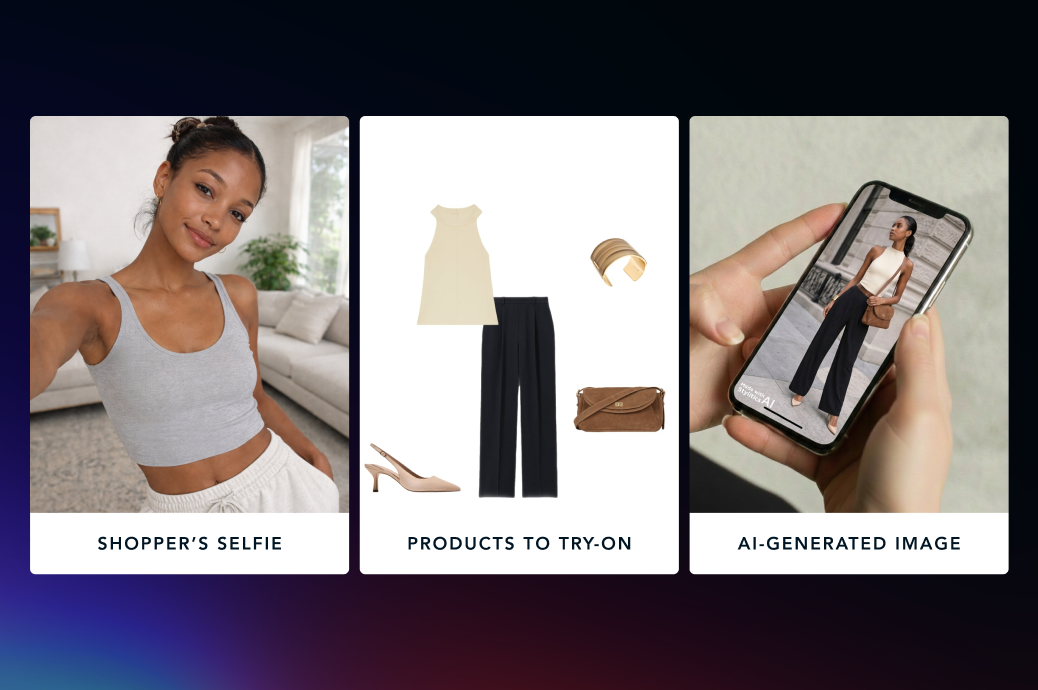
Shoppers want to see how clothes look on their body—or at minimum, on a body that resembles theirs. The rise of selfie virtual try-on fashion tools, virtual fitting room AI, and AI outfit visualizer technology reflects a market where fit confidence and conversion rate are directly linked. Fashion return rates remain stubbornly high in part because shoppers cannot adequately evaluate how a garment will look and fit from a single studio shot on a single body type.
AI-generated UGC-style imagery addresses this from the content side. By producing imagery across diverse model representations—varying in age, ethnicity, body size, and styling context—retailers give shoppers the visual information they need to build purchase confidence without requiring each individual shopper to use a try-on tool. The content itself functions as a passive virtual fitting room: shoppers see the product on someone who looks like them, in a setting that feels real, and the fit uncertainty that drives returns is reduced before the purchase is ever made.
For enterprise retailers evaluating virtual try-on solutions, AI-generated UGC-style imagery offers a complementary and often more immediately deployable approach to solving the same underlying problem. Virtual try-on solutions typically require app integration, selfie capture, and significant technical infrastructure. AI-generated imagery that shows products on diverse, relatable models across everyday settings can deliver many of the same benefits, including greater fit confidence and stronger conversion, through the content itself with no additional shopper action required. The result is a virtual try-on-like effect that works passively, at catalog scale, across every channel, without requiring shoppers to use selfie AI or download a separate tool.
Reducing return rates through better pre-purchase visualization is one of the highest-ROI applications of AI in fashion ecommerce. Whether the mechanism is an AI clothing try-on from a photo or a UGC-style image that shows the product on a relatable model in a real-world setting, the outcome is the same: the shopper buys with more confidence and keeps more of what they order.
AI Image Studio: UGC-Style Content Generation Capabilities
Capability
Description
UGC-Style Images
Informal aesthetic generated at catalog scale with full brand safety and quality control.
The Polished-to-Casual Slider
Configurable dial between polished studio and casual UGC aesthetic for every output.
Lifestyle Scenes
Urban, nature, and real-world environments for UGC-contextual settings.
Social Editorial
Dynamic crops and filters formatted for Instagram, TikTok, and paid social channels.
Pose Control
Natural, casual poses that reinforce the UGC aesthetic.
Lighting & Mood
Natural and ambient lighting profiles for UGC-style realism.
Studio-Style Images
Full spectrum from polished studio to casual UGC from the same product asset.
UGC-style assets with thematic consistency for seasonal lookbook and campaign use.
Smart Crop
Platform-native crops and aspect ratios for every social channel and ad format.
The Social Content Supply Problem Is Solved
Relatable, social-style content has always been one of the most valuable and least controllable parts of retail marketing. Brands have spent years trying to cultivate organic UGC at scale, often with limited success and significant operational overhead. AI-generated UGC-style imagery does not replace the genuine customer relationships that produce organic content, but it does close the supply gap that leaves many brands under-resourced on social and unable to test the creative formats that drive performance.
The brands winning in social commerce are not necessarily the ones with the most organic UGC. They are the ones with the most consistent publishing cadence, the strongest creative test-and-learn capability, and the highest volume of content that feels native to the channels where shoppers spend time. AI generation enables all three simultaneously.
The content strategy that social commerce demands has always been available in principle. AI generation makes it available in practice—at the scale, speed, and cost that enterprise retail requires. And for retailers comparing AI imagery tools on their ability to produce not just studio-quality imagery but whether it can span the full creative range from editorial to UGC-style. A platform that can only replace studio photography solves one problem. A platform that can produce studio, lifestyle, editorial, shop-the-look, and UGC-style content from the same asset solves the content strategy.
FAQ
The system applies a configurable aesthetic profile that captures the visual signals of UGC—informal composition, natural lighting, real-world settings, and casual poses—while maintaining full garment fidelity and brand safety. The output looks genuinely casual, not artificially filtered.
Yes. AI-generated UGC-style imagery is produced in all paid social formats and resolutions. UGC creative consistently outperforms polished studio assets in paid social performance metrics, making these images a particularly high-value addition to paid social creative libraries.
Every output is generated within brand-specific parameters established during onboarding and evaluated by both AI QA Agent and human review before delivery. Brand safety is absolute—no output reaches delivery without passing quality and compliance verification.
Stylitics delivers both style variants for every product in parallel, formatted for channel-specific A/B testing workflows. Creative performance data from these tests can inform future generation priorities and brand aesthetic decisions.
Not directly—but it addresses the same underlying shopper need. Virtual try-on tools let individual shoppers see a product on their own body, while AI-generated UGC-style imagery shows products on diverse, relatable models across settings. For many retailers, the UGC approach delivers comparable fit confidence and conversion lift at catalog scale without requiring app integration, selfie capture, or additional shopper action. The two approaches are complementary, and many brands deploy AI-generated imagery as the foundational layer while evaluating or rolling out virtual fitting room technology in parallel.
Yes. One of the primary drivers of fashion return rates is fit uncertainty—shoppers cannot adequately evaluate how a product will look on them from a single studio shot. AI-generated UGC-style imagery across diverse model representations gives shoppers a more realistic view of how products look on different body types, building pre-purchase confidence and reducing the likelihood of returns driven by unmet expectations.



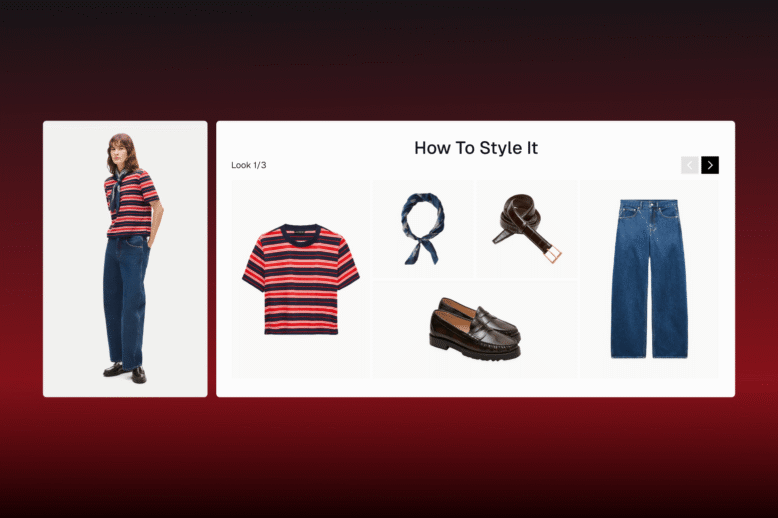
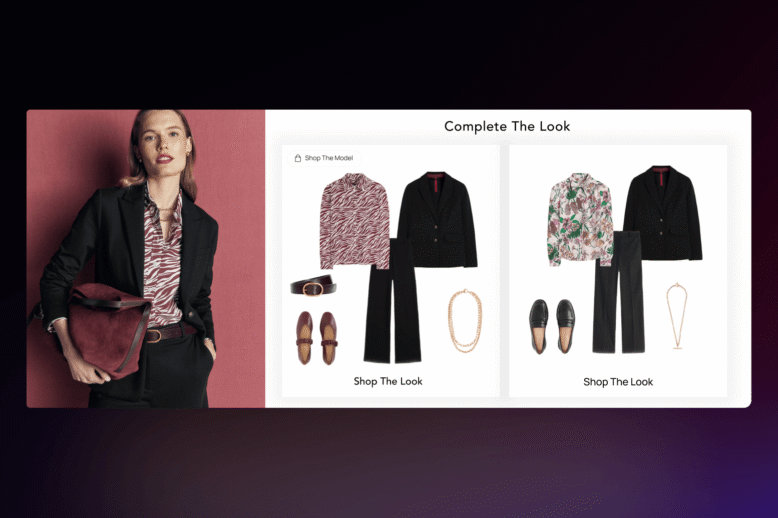
 Shop the Look Let shoppers buy the full outfit directly from any styled image.
 Styled for You Personalized outfit recommendations based on individual shopper preferences.
 Complete the Look Suggest complementary pieces to round out whatever a shopper is already viewing.
 Shop Similar Surface visually comparable alternatives when a specific item is out of stock or out of budget.
 Flat Lay to Model Choose from diverse models with full control over pose, crop, and framing.
 Background & Scene Swaps Place products in clean studio backgrounds, lifestyle environments, or custom lighting moods.
 AI Colorway Swaps Create photorealistic images for every colorway from a single reference shot.
 Model Diversity & Inclusive Imagery Output-ready formats for PDPs, social platforms, and campaign lookbooks.