Lookbook Quality, Catalog Speed: AI’s Role in Modern Editorial Campaigns Lookbook Quality, Catalog Speed: AI’s Role in Modern Editorial Campaigns

Lookbook Quality, Catalog Speed: AI’s Role in Modern Editorial Campaigns

Stylitics Marketing Team

The Stylitics Marketing Team explores the intersection of AI, retail, and shopper experience, sharing strategies and insights that shape the future of product discovery and visual merchandising.

Editorial campaign imagery has always occupied a special category in retail visual production. Where PDP photography documents a product, editorial imagery sells the world around it — the aesthetic, the lifestyle, the identity that the brand invites the shopper to inhabit. The best lookbook images do not just show clothes, they communicate a point of view about how to live in them.

Key Takeaways:

  • AI-generated editorial imagery matches lookbook quality while operating at catalog speed — enabling brands to extend campaign-grade visuals across their full assortment, not just hero products.
  • Seasonal campaign updates that previously required weeks of planning and production can now be delivered in hours from existing product assets.
  • Brand tone, photographer aesthetic, and editorial style can be configured as generation parameters — maintaining creative identity across thousands of images without per-image art direction.
  • Editorial-quality imagery is no longer reserved for campaign moments — AI makes it a standard feature of every product’s visual treatment, every season.

The production requirements that create this quality have historically made editorial imagery expensive to produce and slow to deploy. A lookbook shoot requires art direction, location scouting or set design, a full creative team, post-production with a specific look and feel, and a timeline measured in weeks. The result is that editorial quality is rationed: hero products get the full treatment, the campaign communicates the brand’s aesthetic for the season, and the rest of the catalog stays on PDP standard. Retailers in Stylitics’ conversations recognize this constraint intuitively — one brand’s creative team described the desire to execute on seasonal backdrop, feeling, and mood as a creative ambition that has always outpaced what the production calendar can actually deliver.

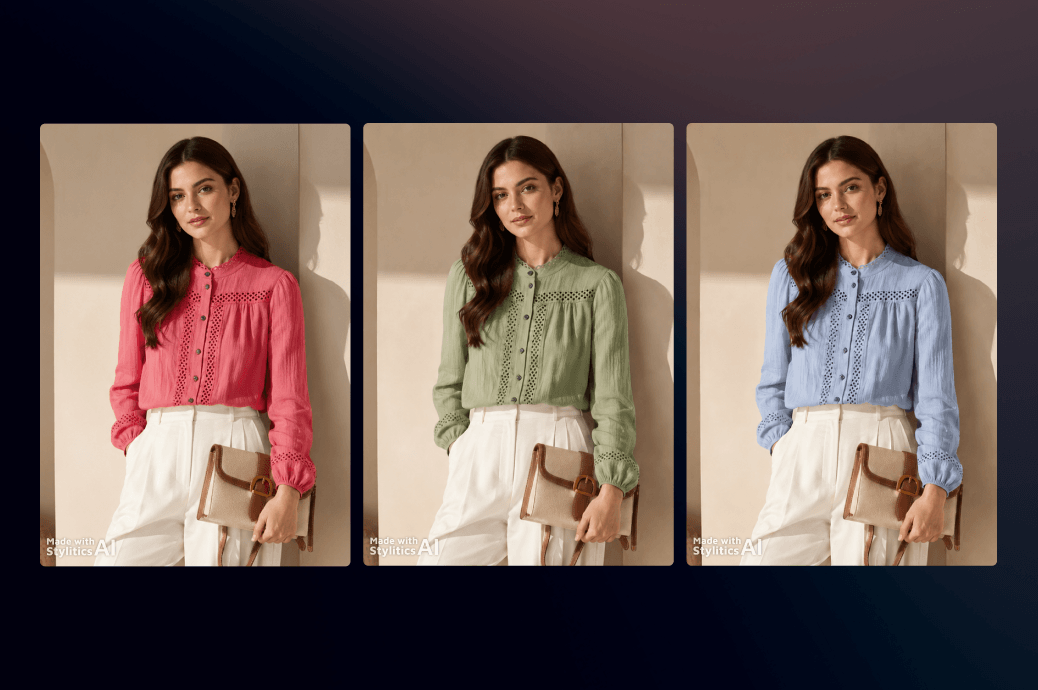
Stylitics AI Image Studio changes what is possible at the intersection of editorial quality and catalog scale. Using configurable brand tone parameters, photographer aesthetic profiles, and editorial style controls, the system generates campaign-grade imagery from existing product assets — at the speed and volume that seasonal commerce requires, without the production overhead that has always constrained editorial investment.

“Editorial quality used to require editorial production. AI generation makes it a standard output of every product’s visual treatment.”

What Makes Imagery Editorial — and How AI Captures It

Editorial imagery is distinguished from commercial product photography by a specific set of visual choices: lighting that suggests mood rather than simply illuminating the product, composition that prioritizes aesthetic intention over documentation, styling that feels considered and aspirational, and a tonal consistency that makes every image feel like part of a coherent visual narrative.

These qualities are not accidental,they are the result of deliberate creative decisions made by art directors, photographers, and stylists working within a defined brand aesthetic. They are also, critically, learnable. Stylitics’ AI generation system can be configured with the specific parameters that define a brand’s editorial identity: photographer aesthetic references, lighting profiles, tonal treatments, compositional conventions, and styling standards. The system can be calibrated to produce imagery in the aesthetic register of recognized fashion photography styles — warm and naturalistic, high-contrast editorial, soft and refined — applied consistently across the full production run.

The result is editorial imagery that maintains the brand’s creative identity across the full catalog without requiring per-image art direction. The system executes the creative brief at scale, applying the same aesthetic decisions to the thousandth image that a skilled art director would apply to the first. Seasonal updates to the editorial aesthetic are propagated across the full production pipeline from a single parameter change rather than a new shoot.

Quality control applies at the same standard as all Stylitics outputs. Retailers in Stylitics’ conversations have been direct about where the bar needs to be set: product accuracy is non-negotiable, and for editorial imagery the brand aesthetic has to hold up just as rigorously as it would in a studio review. The AI QA Agent and human-in-the-loop review process that governs standard PDP production applies to editorial outputs as well, ensuring that creative quality does not erode as volume scales.

Campaign Agility at Catalog Scale

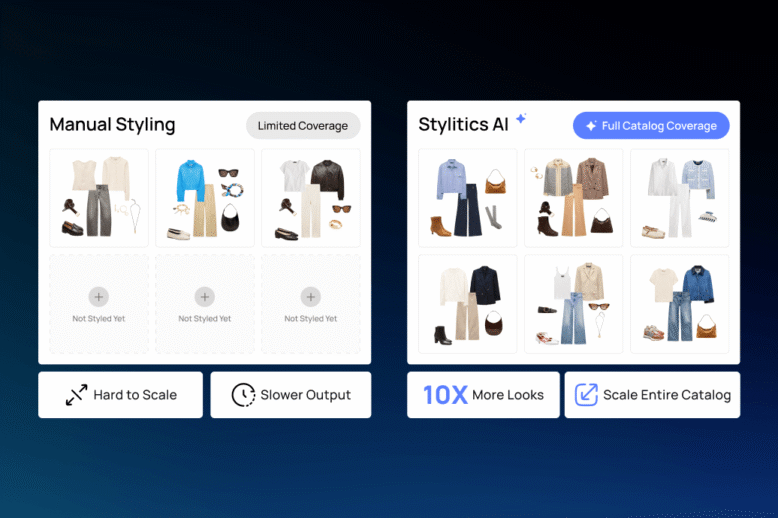
The traditional model for seasonal campaign production separates the campaign imagery from the catalog imagery by weeks of planning and significant budget. Campaign images are produced first, for heroes and key looks. Catalog images follow, typically with less creative investment. The gap in visual quality between the campaign moment and the everyday catalog experience is visible — and it costs brands in perception and conversion on every product that did not make the campaign cut.

AI editorial generation closes this gap by making campaign-quality imagery available for every product, on the same timeline as standard catalog production. A seasonal campaign brief — visual theme, location aesthetic, lighting treatment, styling approach — is ingested as generation parameters and applied across the full product set. Every product participates in the campaign aesthetic, not just the heroes.

This is the operational shift that changes the brand experience for shoppers. Instead of encountering campaign-quality imagery on a handful of featured products and then dropping to standard studio shots across the rest of the catalog, shoppers experience the brand’s aesthetic consistently on every product page. The visual identity that the brand has invested in communicating through the campaign extends all the way to the last product in the assortment.

The speed advantage compounds when the campaign needs to change. A mid-season theme update, a regional market adaptation, or a promotional event requiring a specific visual treatment can be applied across the relevant product set in hours. The production calendar stops being the limiting factor for campaign agility, and creative strategy becomes the primary input. Stylitics’ digital lookbook capabilities extend this further — once editorial imagery is generated at catalog scale, it can be deployed directly into shoppable lookbook experiences that turn campaign content into measurable conversion.

AI Image Studio: Editorial and Campaign Generation Capabilities

CapabilityDescription
Campaign ReadyThematic consistency for lookbooks and seasonal campaigns across the full assortment.
Photographer Tone ProfilesConfigure aesthetic references inspired by renowned fashion photographers for brand tone.
Lighting & MoodGolden hour, soft box, high-contrast editorial, and custom lighting for campaign aesthetic.
Lifestyle ScenesUrban, nature, luxury, and abstract environments for editorial context.
Social EditorialDynamic crops and filters for Instagram, TikTok, and editorial channel native formats.
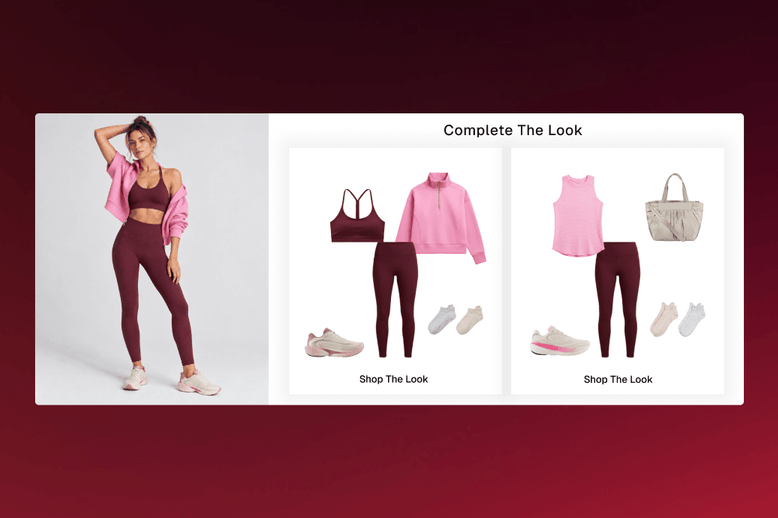
Full OutfittingComplete outfit styling applied with editorial intentionality, not default pairings.
Pose ControlEditorial movement and posing that communicates brand aesthetic and product lifestyle.
Model DiversityCampaign-quality imagery across diverse model representations simultaneously.
Cropping & FramingEditorial crop ratios including portrait, landscape, and square for channel-specific use.
Market LocalizationCampaign aesthetic adapted for regional markets from the same base production.

CASE STUDY

Global Sportswear Retailer: $20M+ in Studio Photography Savings

  • $20M+ total savings achieved
  • 10,000+ images delivered per week
  • Campaign-quality outputs produced at the same speed as PDP imagery

A global sportswear retailer with a 100,000+ item catalog was running campaign-quality imagery for a small fraction of their assortment, with the remainder receiving standard PDP treatment. The production timeline and cost of editorial-quality shoots meant that seasonal campaign aesthetics were not extended to the full catalog. Stylitics’ pipeline generated campaign-grade imagery from the same product assets used for PDP production, extending the seasonal aesthetic across the full assortment. Total savings exceeded $20 million.

The Lookbook Standard Is Now the Catalog Standard

The visual quality gap between campaign imagery and catalog imagery has been an accepted feature of retail visual merchandising for as long as the two production streams have existed separately. AI editorial generation does not just close that gap — it eliminates the production logic that created it in the first place.

When every product can receive editorial-quality visual treatment at the same speed and cost as standard catalog photography, the decision to invest selectively in campaign-grade imagery becomes a strategic choice rather than a budget constraint. Brands can extend the full campaign aesthetic to every SKU, or they can continue rationing quality by product priority. But the constraint that made rationing necessary is gone.As Stylitics’ shopper research confirms, consistency is one of the most powerful trust signals a brand can send across its product catalog. Shoppers who encounter a coherent, editorial-quality visual experience across the full assortment develop more brand confidence than those who see high-quality hero imagery drop off to standard studio shots three clicks in. AI editorial generation makes that consistency achievable at scale — and it is now a standard operational capability, not a luxury reserved for the brands with the largest creative budgets. See how Stylitics AI Image Studio works →

Can we configure AI editorial generation to match a specific photographer’s aesthetic?

Yes. Stylitics supports aesthetic profile configuration based on named photographer references and brand-specific visual style guides. These parameters are applied consistently across all editorial generation outputs.

How are seasonal campaign aesthetic updates applied across the catalog?

Campaign aesthetic parameters are ingested at the brief level and applied across the full defined product set simultaneously. Seasonal updates are propagated from a single parameter change, without requiring per-product production instruction.

Can editorial images be used alongside standard PDP images in the same catalog?

Yes. Stylitics delivers both editorial and PDP-standard image sets from the same product ingestion, formatted appropriately for each use case. Editorial and commerce images are produced in parallel within the same pipeline.

What is the turnaround time for a full seasonal campaign production run?

Standard seasonal production runs deliver complete editorial and PDP image sets within the contracted SLA timeline. Rush timelines can be accommodated, with guaranteed delivery timeframes included in the service agreement.